
Video Lottery Terminal Hardware: The Six Groups
Every terminal splits into the same six groups, whatever the jurisdiction calls it. The useful question is not "what does a terminal cost" but "which of these six does this number include".
| Group | What sits in it | Who specifies it | What changes the build |
|---|---|---|---|
| Cabinet | Steel shell, door, service access, locks and sensors | The build, within venue constraints | Service access, floor space, security requirements |
| Display | Size, aspect, touch or button input, bezel aperture | Game design and market rules | A larger or dual screen re-cuts the door and bezel |
| Computing | Board or platform, OS and firmware, central-system link | The programme or the regulator's approved list | Any change to the platform reopens testing |
| Payment path | Acceptor, ticket printer, card and contactless reader | The operator, within approved models | Peripheral model drives cut-outs, harness and power |
| Controls | Deck layout, button set, player-tracking interface | The operator, within the approved configuration | Deck layout changes the die-line and wiring |
| Security | Door sensors, access log, tamper record | The regulator | Logging requirements the terminal has to expose |

VLT Terminal Cabinet: Format and Service Access
Three formats cover most programmes, and the choice is driven by the venue rather than by the game.
| Format | Where it fits | What to check before specifying |
|---|---|---|
| Upright floor cabinet | Racetrack and gaming-floor installations | Floor footprint, door swing, cable entry, secure anchoring |
| Bar-top or counter unit | Licensed premises with limited floor space | Counter load rating, service access from the front, spill exposure |
| Wall-mounted terminal | Venues where floor space is the constraint | Wall structure, mounting pattern, service posture, screen height |
Service access is the requirement that most often changes the drawing. A terminal in a network has to be serviceable where it stands: door opening, printer access and acceptor access all drive the panel layout, and none of them can be solved later.
Video Gaming Terminal Specifications: What the Regulator Names
A terminal specification is written by a regulator, not by a supplier. Published documents typically name the following, and the supplier builds to them:
- Approved hardware and software submissions — what must be submitted before a change goes live.
- Peripheral allowances — which devices are permitted, for example whether note acceptors are allowed and under what conditions.
- Consumer-protection requirements — session limits, credit display, time display, responsible-play messaging.
- Technical standards — communication, security, logging and error handling.
- Submission process — the route for hardware, software and game-specific changes.
Western Australia is a useful public example: its Gaming and Wagering Commission publishes Video Lottery Terminal Specifications and Standards, with version 3.0 taking effect on 1 August 2026 and covering note acceptors, consumer protection, technical standards and the submission process for hardware and software changes. The lesson for a buyer is procedural: a build is signed off against a named version of a named document, and a version change means a re-check.
Cash, Ticket and Card: The Payment Path
Three devices carry the money, and each one is a separate line in a terminal quote.
| Device | What it decides | What to confirm |
|---|---|---|
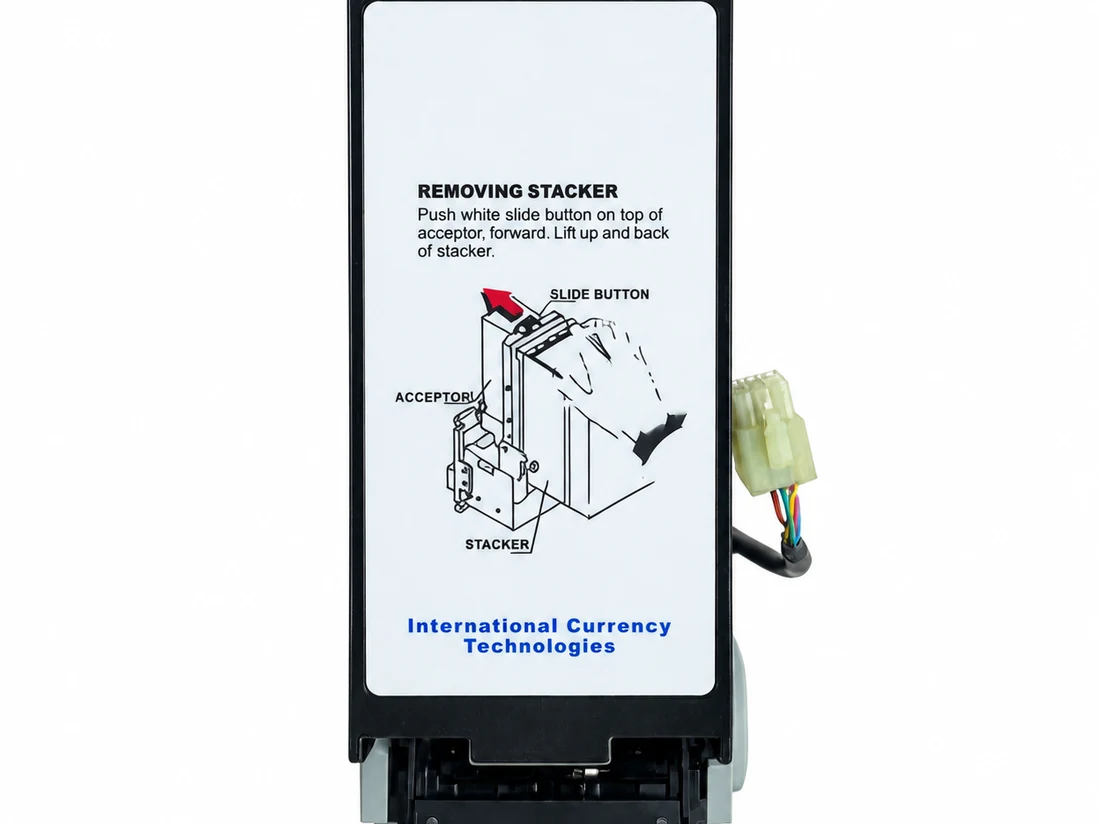
| Bill acceptor | Door cut-out, power rail, denomination set | Model, interface, note set for the market |
| Ticket printer | Bezel position, paper path, jam access | Model, TITO compatibility, roll size |
| Card / contactless reader | Panel cut-out, cable routing, player-tracking link | Protocol, whether the system issues cards or accounts |
On a VLT, the payment path is also an audited path: every note, ticket or card event the terminal accepts has to be visible to the system behind it. That is why the peripheral list belongs in the technical submission rather than in a purchase order attachment.
Who Buys and Who Leases VLTs
Terminals rarely sell to the venue. Three parties sit around the transaction, and the supplier's customer is usually the first or the second:
- The lottery or gaming authority runs the network and often procures terminals centrally, through a tender or an approved-supplier list.
- The terminal operator or route company may own, lease or place machines under the authority's rules, and is the party that keeps them serviced.
- The venue hosts the terminal and usually receives a share of revenue rather than owning the hardware.
This is the practical difference from casino sales: the buyer may be a public body, the acceptance criteria are written into a tender, and the machine has to interoperate with a system the supplier does not control. Leasing arrangements vary by jurisdiction and are set by the authority and the operator, not by the manufacturer.
Can You Buy a VLT Machine for Sale?
"VLT machines for sale" is a misleading search phrase, because in most markets the terminal is not sold retail to a venue. Three procurement routes exist, and which one applies decides who the supplier’s contract is with:
- Central procurement. The lottery or gaming authority runs a tender and buys or leases the terminals centrally, then places them with venues.
- Approved supplier list. The authority approves manufacturers, models or both, and operators buy within that list.
- Operator procurement. A licensed terminal operator or route company purchases the machines and places them, keeping ownership of the asset.
Where a licensed operator does buy outright, it is a capital purchase with the regulatory conditions of that market attached — not a retail transaction. What a manufacturer can supply is the cabinet, the hardware and the integration; the operating right is granted by the authority and cannot be sold with the machine. The comparison with a casino slot purchase, including who banks the revenue, is on VLT vs slot machine.
No terminal price is published here, because the total is built from six lines and the range between two builds of the same size is wide.
| Line | What sits inside | What pushes it up |
|---|---|---|
| 1. Cabinet and format | Steel, door, locks, service access, mounting | Heavier gauge, more doors, wall-mount structure |
| 2. Display | Panel, touch layer, bezel | Larger size, dual screen, curved panel |
| 3. Computing | Board, OS, firmware, central link | Approved platform, additional certification |
| 4. Payment path | Acceptor, printer, reader | Cash recycling, contactless, market-specific models |
| 5. Controls and security | Deck, buttons, sensors, logging | Player tracking, additional sensors |
| 6. Packing and freight | Crate, pallet, container fit, documents | Volume, destination, Incoterm |
For how those lines behave in a themed or bespoke build, the six-line structure is explained in what drives the cost of a themed cabinet. For the cabinet side alone, see slot machine cabinet models.
Integration and Test Scope
Integration is where a terminal stops being a cabinet. Four checks decide whether it is ready for a submission:
- Link test: the terminal registers, heartbeats and recovers from a dropped connection as the programme expects.
- Payment test: each device takes, records and reports what the system expects to see.
- Control test: deck inputs and player-tracking interface behave under the approved configuration.
- Record test: the build record matches the machine — board, firmware, peripheral models and revisions.
The acceptance record should name exactly what ran. A record that lists two functions is evidence for two functions; a record that lists nothing is a photograph.
What a Brief Needs
Six fields get a terminal quote to a comparable state: destination jurisdiction and programme, cabinet format or venue constraint, display size and aspect, payment device models, central-system protocol, and quantity per configuration. The themed cabinet RFQ template uses the same structure if you want a copy-ready version.
Frequently Asked Questions
What hardware does a video lottery terminal need?
Six groups: cabinet (shell, door, service access, locks), display (size, aspect, input), computing (board, firmware, central link), payment path (acceptor, ticket printer, card reader), controls (deck and player-tracking interface) and security (sensors and logging). Each group has its own owner and its own line in the quote.
Who buys and who leases video lottery terminals?
Usually not the venue. The lottery or gaming authority runs the network and often procures centrally through a tender or approved-supplier list; a terminal operator or route company may own, lease or place the machines and keeps them serviced; the venue hosts the terminal and takes a share of revenue. Leasing terms are set by the authority and the operator, not the manufacturer.
How much does a full-size video gaming terminal cost?
No market price is published here. A terminal is quoted across six lines — cabinet, display, computing, payment path, controls and security, then packing and freight — and the payment path alone can move the total more than the cabinet. Ask for the six lines separated so two suppliers can be compared on the same basis.
Does the regulator approve the cabinet or the whole terminal?
The whole terminal, as a configuration: hardware, firmware and game build together. That is why a cabinet that matches on the outside can fail on paper — the approved configuration is version-specific, and a new board, display or peripheral model usually reopens the file.
Can you buy a VLT machine for sale?
Yes, but not retail. In most markets the terminal is bought centrally by the lottery, through an approved supplier list, or by a licensed terminal operator who places it. A licensed operator can buy outright where the market allows it, with the regulatory conditions of that market attached. The manufacturer supplies cabinet and hardware; the operating right comes from the authority, not from the machine.
Regulatory detail differs by jurisdiction and changes over time. Where a specification version or an effective date is named on this page, confirm it against the regulator's own publication before a build is released.
Scope a Terminal Build for Your Market
Send the jurisdiction and programme, the central system you must connect to, the cabinet format and the payment devices you intend to use. The reply separates the six hardware groups and names the evidence your submission will need.
Request a Terminal Quote →