
Key Takeaways
- Rooted in the WEIMIAO R&D team — gaming-hardware and platform engineers with 25+ years building slot, fish-game and push-score systems — GOLDPRIME GAME keeps sheet metal, CNC, PCB, SMT, RNG, assembly, QC and testing in-house, so we engineer and build end-to-end solutions, not resold boxes.
- Every cabinet moves through one flow: production line, burn-in testing, multi-point QC, factory acceptance, then export-grade packing.
- Certifications (GLI / BMM / CE) are scoped per market and per order — never implied as blanket approval.
Anyone can rent a showroom and call it a factory. Far fewer suppliers can walk you from a coil of sheet steel to a crated, floor-ready cabinet without leaving the building. This page is that walk — a virtual tour of the GOLDPRIME GAME slot machine factory, the same plant that builds every cabinet, board and harness we ship.
Here is the answer up front: GOLDPRIME GAME is Rooted in the WEIMIAO R&D team — gaming-hardware and platform engineers with 25+ years building slot, fish-game and push-score systems — and we run eight capabilities in-house on one floor: sheet metal, CNC machining, PCB design, SMT assembly, RNG engineering, final assembly, quality control and burn-in testing. If a supplier cannot show you all eight, you are buying from a reseller with a margin, not a manufacturer with accountability. We are an equipment and software supplier that engineers the machines, boards and code, with licensing and compliance in your market sitting with you.
Why does the tour matter to a buyer? Because every promise a supplier makes — lead time, revision matching, certification support, spare parts ten years from now — is only enforceable if the supplier controls the processes behind it. This page shows you those processes, station by station, so your next RFQ can ask the questions that separate an engineering-owned plant from a reseller. If you want the commercial view first, our slot machine manufacturer page covers product lines and OEM/ODM scope; this page covers the plant itself.
What a Real Slot Machine Factory Actually Is
A slot machine factory is a manufacturing plant where the cabinet and its electronics are designed, fabricated, assembled and tested under one roof, by one accountable organization. That definition sounds obvious. It eliminates most of the market.
Many "manufacturers" in this industry are assembly shops at best: they buy cabinets from one plant, boards from another, and artwork from a third, then screw the pieces together. Some do not even assemble — they re-label. The result for the buyer is a product with four parents and no guardian. When a mainboard fails in year two, nobody owns the failure, because nobody owns the whole design.
The test is simple. Ask a supplier to show you, on one visit or one video call: the laser cutter that makes the frame, the SMT line that builds the board, the burn-in racks that age the finished unit. An engineering-owned plant walks you through in an afternoon. A reseller asks for time to "arrange it." Our overview of the full capability stack maps each of these stations in detail; the sections below walk them in the order material actually flows through the plant.
Key Facts & Citable Data
The figures below are the most-cited facts on this page; each carries its source.
- 8 in-house capabilities. Sheet metal, CNC machining, PCB design, SMT assembly, RNG engineering, final assembly, quality control and burn-in testing all run under one roof. (Source: GOLDPRIME GAME company data)
- Lead time of 12–42 working days. Typical production lead time runs 12–42 working days depending on volume and customization level. (Source: GOLDPRIME GAME company data)
- 30+ countries of export experience. GOLDPRIME GAME has shipped equipment and software to operators in more than 30 countries. (Source: GOLDPRIME GAME company data)
- ISO 9001. The international quality management systems standard that structures documented production and QC processes. (Source: International Organization for Standardization public standard)
Figures dated 2026-08; verify the current version of any standard with the issuing body before filing.
Inside the Plant: 8 In-House Capabilities
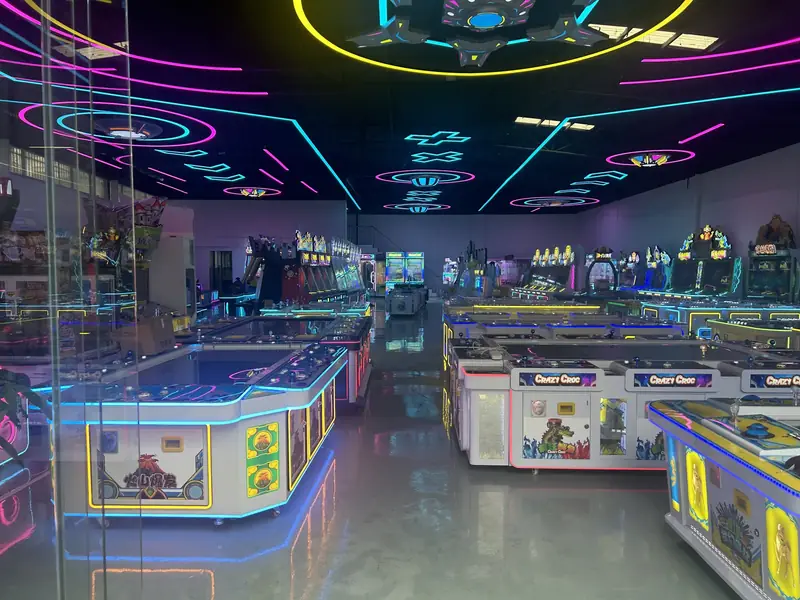
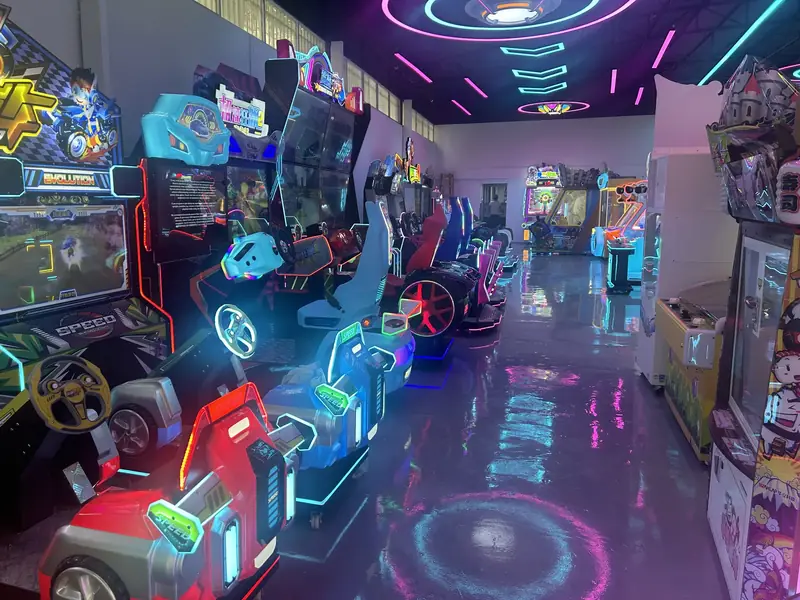
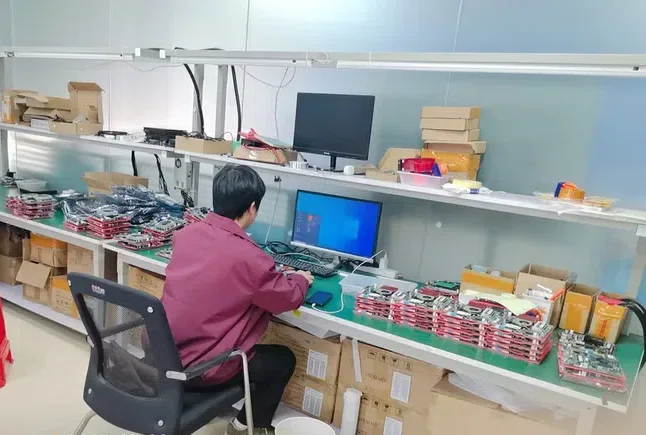
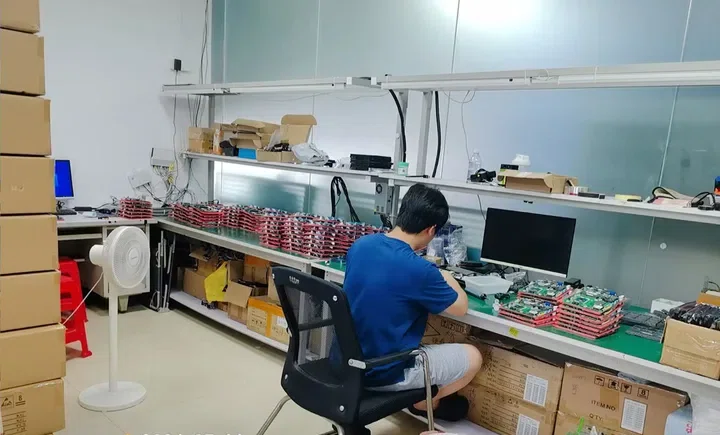
Material enters as steel sheet, copper-clad laminate and electronic components. It leaves as crated cabinets. Between those two points sit the eight capabilities that define a genuine slot machine manufacturing plant.
1. Sheet Metal Fabrication
The cabinet frame starts here. Our sheet metal shop runs laser cutting, CNC bending and welding, building frames and bezels for 24/7 venue duty. Doors align, service panels open without tools, and toppers seat cleanly — because tolerances are set by the same team that designs the electronics the frame must protect. On-site metalwork means a prototype iteration costs days, not a supplier negotiation.
2. CNC Machining
Beyond sheet metal, CNC machining handles the parts that need tighter fits: mounting brackets, mech plates, connector panels and custom fixtures for special builds. When an OEM project calls for an unusual footprint or a non-standard bill acceptor position, the machining shop produces the hardware instead of forcing your design to fit a catalog frame.
3. PCB Design
Boards are where most "factory" claims quietly fail. Our PCB design team owns schematic capture, layout and secure-boot architecture for every mainboard we ship. Owning the design means we control the bill of materials — and when a component goes end-of-life five years into your deployment, we re-spin the board instead of declaring your fleet orphaned.
4. SMT Assembly
Design without assembly is just a file. Our surface-mount lines place and solder components on our own boards, with inspection at reflow. Because SMT sits in the same building as PCB design, engineering feedback loops are short: a layout issue found on the line is fixed in the next revision, not negotiated across a border. This pairing is what makes revision-matched spare boards possible years after the original order.
5. RNG Engineering & Firmware
A cabinet without trustworthy math is furniture. Our RNG engineering group builds certifiable random-number generation, auditable math models and the firmware that ties board, display and peripherals together. Models are tuned per market and documented so a testing lab can audit them — because a beautiful game that fails certification never earns back its tooling cost.
6. Final Assembly
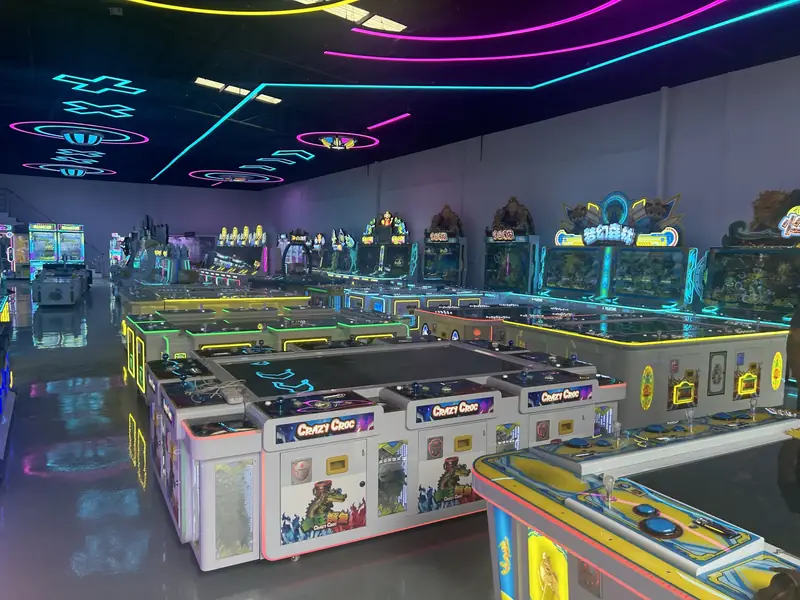
Final assembly pulls the chain together: frame, board, display, button panel, mechs, harnesses and firmware become one unit on staged build stations. Each station has its own checklist, and the cabinet carries its build record forward — so a question about unit #0473 is answered from a file, not from memory.
7. Quality Control
QC runs at multiple points, not just at the end. Incoming components are checked before they reach the line. Boards are tested after SMT. Assembled units pass electrical safety, display, button-matrix, mech and firmware-version checks before they are allowed into burn-in. Defects are cheapest where they are caught earliest, and multi-point QC is how we catch them early.
8. Burn-In & Testing
The last capability is time itself. Finished units go onto burn-in racks and run under load, because the failures that matter are the ones that show up in week one on your floor — not month six. Burn-in plus functional testing filters infant mortality before a cabinet ever sees a shipping container, which is the cheapest warranty program a factory can run.
From Production Line to Export Crate
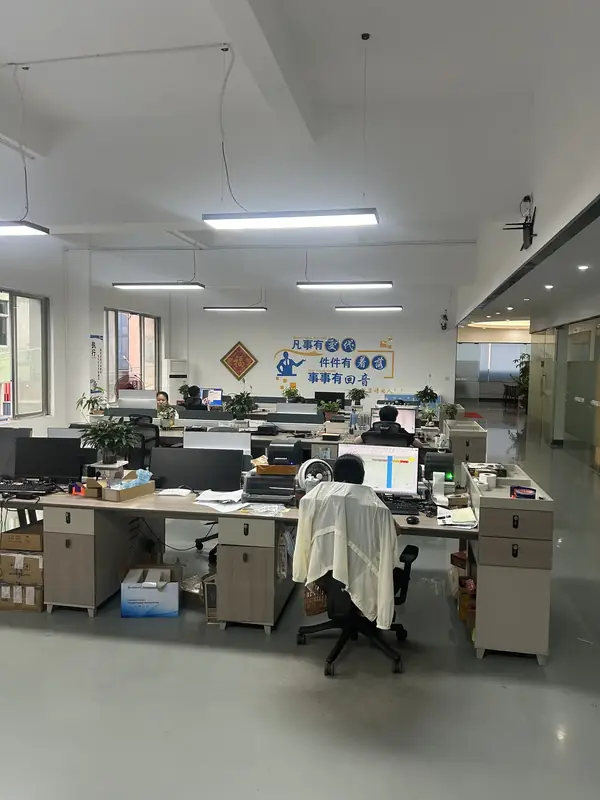
The flow through the plant is linear and auditable. Raw material is kitted to a production order. Frames are fabricated and finished. Boards come off SMT, get flashed with the order's firmware revision, and meet the frame at assembly. Assembled units run the QC gauntlet, then burn-in, then a final acceptance check against the purchase order.
Only then does packing begin. Export packing is its own discipline: cabinets are wrapped, corner-protected and crated for ocean or air freight, with shock and moisture protection sized to the route. A cabinet that survives our burn-in rack but arrives damaged in your warehouse is still a failure — so the crate is engineered like part of the product. The full step-by-step flow, from deposit to delivery documents, is laid out on our manufacturing process page.
Quality Gates: Multi-Point QC and Factory Acceptance
Quality at this plant is not a department at the end of the line. It is a series of gates that material cannot pass without a record. Incoming inspection checks components against the bill of materials. In-process checks follow SMT and assembly. Final QC runs the full functional checklist. Burn-in adds hours of load. Then factory acceptance testing closes the loop: each unit is verified against the actual purchase order — configuration, firmware version, mechs, language, artwork.
Factory acceptance is the gate buyers should care about most, because it is the last point where a fault costs us money instead of you. A cabinet that fails acceptance gets fixed on our floor, on our time. A cabinet that fails in your venue costs floor revenue, a service call and player trust. Certifications (GLI / BMM / CE) are scoped per market and per order — never implied as blanket approval — and the acceptance record is built to support that scope. Our GLI certification capability explains how build records feed lab submissions.
Certifications on the Wall
Buyers reasonably ask to see certificates. We show them — with context. Below are redacted thumbnail copies of certification documents held by the plant; full-resolution copies are available under NDA during the RFQ process, scoped to your market and order.
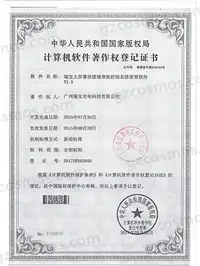
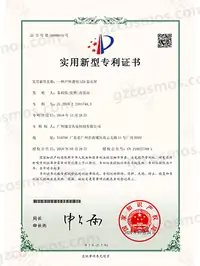
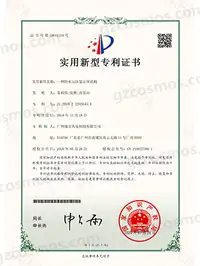
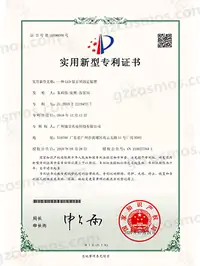
A certificate is evidence for a specific product, in a specific market, at a specific time — not a blanket approval you can wallpaper a sales pitch with. Any supplier who implies otherwise is telling you something about how they treat regulators, and by extension, how they will treat you.
Why an Engineering-Owned Manufacturer Beats a Reseller
The reseller model has one genuine advantage: a fast first quote. Everything after that is slower, because every question has to be relayed to a plant it does not control. Who owns a firmware bug? Who re-spins an end-of-life board? Who signs the acceptance record? In the reseller model, the honest answer is often "nobody in this email chain."
An engineering-owned manufacturer inverts that. Rooted in the WEIMIAO R&D team — gaming-hardware and platform engineers with 25+ years building slot, fish-game and push-score systems, our engineering, production and quality sit in one building, so answers come from the people who did the work. Spare parts are cut from the same tooling as your original order. Certification evidence comes from the team that wrote the math model. When you are vetting sources, our guide to slot machine manufacturers in China lists the verification steps — business scope, plant visits, tooling evidence — that separate engineering-owned plants from relabelers.
Illustrative example, not a specific client. A distributor evaluating two suppliers asked each for a live video walk of the SMT line. One walked the camera over in ten minutes. The other scheduled for "next week" three times, then sent photos of a showroom. The distributor placed the trial order with the factory that showed the line. The deciding factor was not price; it was the absence of translation between question and answer.
What to Check on Any Slot Machine Factory Tour
Whether you tour our plant or a competitor's, the same five checks separate a working factory from a showroom. Bring this list.
One, follow the material. Ask where steel sheet and components enter the building, then walk the route to finished goods. Gaps in the route are outsourced processes, and outsourced processes are where accountability goes to die.
Two, watch the SMT line run. A line that is "down for maintenance today" every visit may not exist for your product at all. Ask which board on the line corresponds to which shipping product.
Three, open a QC record. Any unit on the burn-in rack should have a build file behind it — checks passed, firmware version, operator sign-offs. If the file cannot be produced in minutes, the process is theater.
Four, ask about end-of-life components. The answer reveals whether the factory owns its designs. An engineering-owned plant re-spins boards; a relabeler changes the subject.
Five, meet the engineers, not just the sales team. The people who will fix your firmware bug in year three should be on the call. If the supplier cannot put engineering in the room, you have learned what post-sale support will feel like.
These checks cost you one afternoon and save you a procurement cycle of regret. We run them with visitors ourselves, because a plant that passes them has nothing to stage.
Plan Your Visit — or Start with a Video Tour
The best version of this tour is the live one. We host on-site visits for qualified buyers, scheduled around active production so you see real builds, real burn-in racks and real QC records — not a staged floor. If travel is not practical, a live video walkthrough covers the same stations with the same engineering staff on the call.
Certification scope is configured per market and per order — so come ready to tell us about your market, your product plan and your floor plan. That context is what turns a factory tour into a useful RFQ.
Ready to see the plant? Book a factory tour or video walkthrough and we will come back in about 72 hours with proposed dates, an agenda matched to your project, and the engineering staff who would actually build your order.
Frequently Asked Questions
What is a slot machine factory?
A slot machine factory is a manufacturing plant that designs and builds gaming cabinets end to end — sheet metal, electronics, firmware, assembly and testing — rather than reselling finished units. GOLDPRIME GAME runs this kind of plant, supplying licensed, regulated-market operators and their distributors directly.
Can I visit the slot machine manufacturing plant?
Yes. Serious buyers can book an on-site visit or a live video walkthrough of the floor — sheet metal, SMT, assembly and burn-in included. We schedule tours around active production so you see real work, not a staged showroom. Request a slot through the quote page and we will confirm a date.
What does a gaming machine factory produce in-house?
A genuine gaming machine factory produces the cabinet frame, machined parts, mainboards, SMT-assembled electronics, RNG and firmware, wiring harnesses and final assemblies under one roof. GOLDPRIME GAME keeps all eight of these capabilities in-house, which is what makes lead times and quality commitments enforceable.
How is a slot machine factory different from a trading company?
A factory owns tooling, engineering and quality control, and answers for failures after delivery. A trading company resells units from a plant it does not control, so design changes, spare parts and certification support all pass through a middleman. The factory is accountable for what ships; the trader is not.
What certifications can you show from the factory?
We maintain certification evidence across GLI, BMM and CE pathways, scoped per market and per order. On tours and in quotes we share redacted certificate copies, with full-resolution documents available under NDA. We never present certificates as blanket approval — scope always follows your jurisdiction.
What is factory acceptance testing?
Factory acceptance testing is the final pre-shipment checkpoint where each cabinet is verified against the purchase order: configuration, firmware version, mechs, display and safety checks. Units ship only after passing. It protects the buyer because faults are caught on our floor, not on yours.
What is the lead time from your slot machine factory?
Typical production lead time is 12–42 working days depending on volume and customization, with MOQ from 1 unit for trial cabinets. Quotes come back in about 72 hours. Because every process is in-house, a schedule we commit to is a schedule we control.
Who can buy from GOLDPRIME GAME's factory?
Operators, distributors and project buyers sourcing equipment for their target markets. We are an equipment and software supplier — machines, boards and code. Certification scope is configured per market and per order; licensing and compliance in the destination market are the buyer's responsibility.
Can the factory handle OEM and ODM customization?
Yes. Cabinet form factor, branding, artwork, firmware, math models and CMS integration are all customized in-house, from a single prototype to volume runs. Because the same plant builds standard and custom units, a custom project does not depend on outside vendors to stay on schedule.