
Key Takeaways
- Skill game software lives or dies on whether the skill mechanic is genuine, measurable and documented — a cosmetic button on slot math is an enforcement file waiting to happen.
- Per-market software loads, signed and manifested, are how a fleet survives the state-by-state regulatory wave.
- Certifications (GLI / BMM / CE) are scoped per market and per order — never implied as blanket approval.
Buyers evaluating skill game software usually start by asking about the game catalog. The catalog is the wrong starting point. The right first question is whether the skill mechanic inside each title is genuine, measurable and documented — because that property, not the artwork, decides whether your machines survive the regulatory wave now moving state by state.
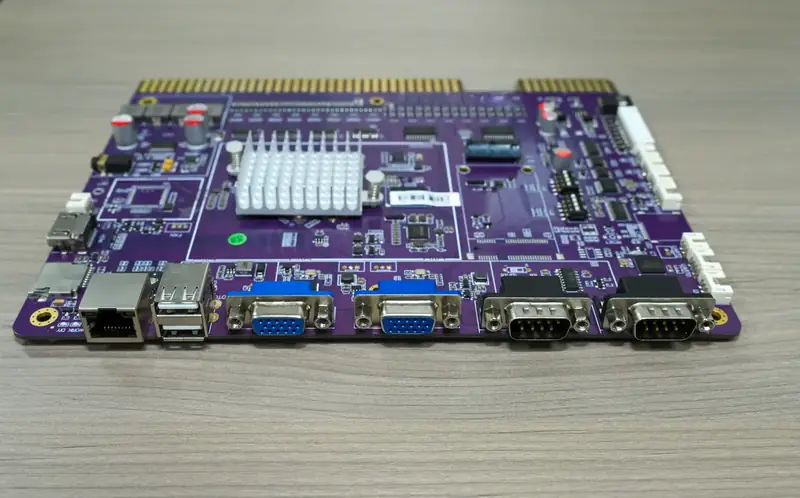
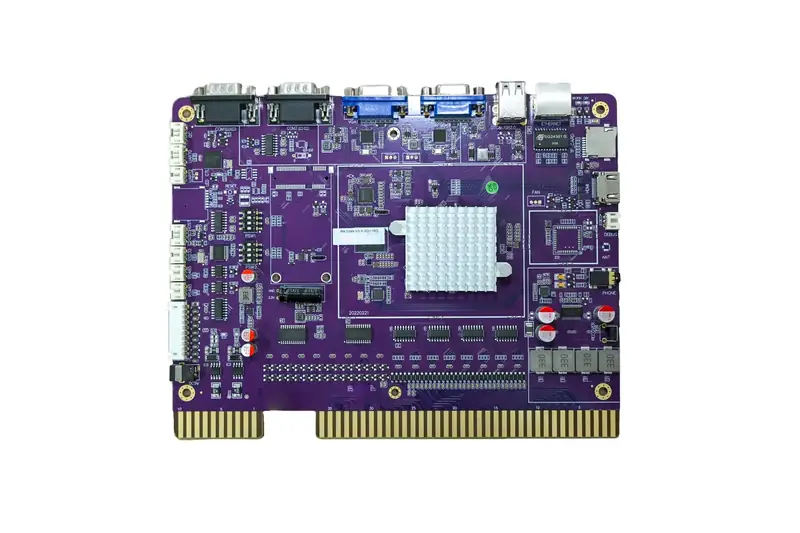
Answer up front: serious skill game software is an engine with auditable skill mechanics, per-market math, signed builds and a manifest your compliance file can hold. GOLDPRIME GAME builds that engine in-house, on the same program as the skill game board it runs on and the skill game cabinet it ships in. We supply the software, the hardware and the documentation; operating licenses and local compliance sit with the buyer.
This page is the commercial-investigation view: what the software covers, how the skill mechanics work, how per-market loads are managed, and how custom development runs. The full-machine purchase view is on the skill game machines pillar.
What Skill Game Software Covers
The term spans four layers, and a quote that does not separate them is hiding something.
Game engine — the core loop: reels or playfield, feature logic, animation, sound, the player-facing flow from credit to outcome. Skill mechanics — the documented player-input systems: nudge, skill-stop, pattern completion, recall. Math model — return profile, difficulty, hit behavior and how the skill window interacts with any chance elements. Reporting and control — meters, event logs, configuration locks and the manifest that ties a build to a market.
The layer buyers underestimate is reporting. When a licensing officer asks what a machine did last quarter, the answer comes from this layer or it does not come at all. Engine, mechanics and math earn the floor; reporting keeps the license.
One more boundary worth naming: skill game software is not a mobile app port and not a social-casino skin. Venue software runs on certified hardware, survives power cuts mid-spin, logs in tamper-evident form and behaves identically on machine one and machine ten thousand. Consumer code is built for engagement; venue code is built for evidence. The two disciplines share a language and almost nothing else.
The Four Skill Mechanics
Each mechanic is a family with its own player psychology and its own documentation needs.
Nudge. The player shifts a reel or symbol within a defined window. Timing and judgement decide whether the shift pays. Nudge window width and shift rules are the parameters regulators read first, which is why nudge game software from us ships with the window logic written into the math documentation, not left in a code comment.
Skill-stop. Outcomes resolve on stop precision against a moving target. The resolution tolerance — how exact a stop must be — is a documented parameter, configurable per market and frozen per build.
Pattern. The player completes a visible sequence; completion paths and difficulty curves are part of the math model. Pattern titles test planning rather than reflexes, and they suit venues with longer dwell times.
Recall. Memory of a shown answer decides the result. Recall is the clearest skill claim of the four and the easiest to demonstrate to a skeptical reviewer, which is why most multi-game catalogs include at least one recall title.
A credible catalog carries all four families. Venue demographics prefer different mechanics, and a state questioning one family's skill content should not take your whole floor with it.
How Skill Mechanics Get Documented
The difference between a claim and a mechanic is paperwork. For every title and every market load, the documentation set describes the skill element in terms a non-engineer can audit: what the player controls, the window or tolerance within which input matters, how the outcome distribution shifts between skilled and unskilled play, and how the math model bounds that shift.
That last item is the one labs and regulators lean on. A skill claim is credible when the math shows a measurable spread between a perfect player and a random one — and when the build in the machine matches the math on paper. We test that spread during development and freeze it into the signed load. The description, the test records and the manifest ship as part of your build file, because the day you need them is not the day you want to commission them.
This is also where bought-in game packages fall apart. A licensed-in title with undocumented mechanics is a black box sitting inside your license application. When the reviewer asks how the nudge window works, "the vendor in another time zone knows" is not an answer.
Per-Market Software Loads
The unit of compliance is not the game; it is the signed load.
Each jurisdiction gets its own build: skill parameters, reporting fields, payout framing, session limits and language set against the market's rules, compiled, signed and manifested. The machine reports which load it runs in its standard log stream, so a fleet audit is a report query rather than a truck roll. Change markets and the load changes — with documentation — while the hardware revision stays put.
This discipline is what the current U.S. shift rewards. Pennsylvania's move to regulate skill games as gaming machines, tracked with sourced data on our Pennsylvania skill games page, is the template other states are reading. Fleets running signed per-market loads adapt to that kind of ruling with a software campaign. Fleets running undocumented builds start over — or exit.
Where chance elements exist inside hybrid titles, our RNG engineering team builds them to certifiable standards with auditable math, so the chance layer is as documented as the skill layer.
Skill Game Software vs. Slot Machine Software
The two stacks share security DNA and differ where it counts legally.
Our slot machine software resolves outcomes on certified RNG alone and documents that RNG for gaming labs. Skill game software documents the player-input mechanics and their interaction with the math — a different evidentiary story for a different regulatory category. Signed builds, tamper-evident logs and revision control appear in both, because both live or die on audit.
The procurement consequence: do not accept "slot software with a skill mode." The firmware is what a regulator reads, and a slot math model wearing a skill costume converts a licensing review into an enforcement file. If your license covers casino-style gaming, buy the slot stack. If your market licenses skill or amusement formats, this page's stack is the one with the right paper.
Above both stacks sits the venue layer — CMS, player tracking, multi-venue reporting — covered on our game platform development page. Skill game software reports into that layer through standard interfaces, yours or ours.
There is also a fleet-planning consequence. Operators licensed in both categories can run slot titles and skill titles from one supplier on shared security architecture, with one parts chain and one escalation path — while keeping the two regulatory files cleanly separate. That combination, mixed product with unmixed paperwork, is where a single-manufacturer stack pays for itself.
Integration, Reporting & the Venue Layer
A machine that cannot report is a machine your accountant and your regulator both distrust. The reporting layer emits meters, game events, door and security events, payout totals and load identity in a documented format. Route operators pull it into their accounting systems; venue groups pull it into floor dashboards; compliance pulls it into license renewals.
Integration scope is set per market because connectivity rules are set per market. Where live reporting is required, the build supports it. Where it is prohibited, the machine logs locally with export on physical visit. Where it is optional, you decide — and the decision is recorded in the configuration document, not improvised at install.
Above the machine sits the venue platform: CMS, multi-venue reporting, player tracking where the market licenses it. Our game platform development track builds that layer, and the skill game software on this page reports into it natively. Operators running their own platform get the interface specification at scoping stage — no proprietary toll booth between your machines and your data.
Custom Skill Game Development
Catalog titles cover most floors. Skill game development as a custom track covers the rest: branded titles, mechanic variants tuned to a demographic, market-specific feature sets, and white-label programs where the entire player-facing surface is yours.
A custom program runs in documented stages. Scoping fixes the market, the mechanic family and the math envelope. A playable prototype follows for your team and — where useful — for your counsel or lab to react to early. Production hardens the build, signs the per-market loads and writes the manifest. Stages exist so that the expensive questions get asked while answers are still cheap.
Ownership is contractual and settled before work starts: custom content and brand elements are yours exclusively; the underlying engine stays with us so security patches, updates and new-market variants remain maintainable across years. That split is what keeps a 2026 title serviceable in 2031.
Illustrative example, not a specific client. A distributor wanted a house-brand nudge title with tighter windows than catalog defaults for a market whose draft rules pointed that way. Prototype in five weeks, two math revisions after counsel review, then a signed load and a 120-machine fleet. When the final rules landed close to the draft, the fleet was already compliant — the revision happened in software, before the deadline, not in hardware after it.
Engineering & Compliance Standards
Builds are engineered compliant-ready: GLI / BMM / CE pathways supported per market and per order, never implied as blanket approval. The deliverable set per load — math documentation, skill-mechanic description, manifest, security notes — is produced for audit, not for marketing.
Two commitments sit underneath every build. We are an equipment and software supplier — machines, boards and code — with licensing and compliance in your market sitting with you. And every parameter movement is configured to your stated market specification and documented in the build manifest. A supplier willing to "turn the skill up past the limit" is not doing you a favor; they are writing your enforcement file with their compiler.
That standard is easier to hold because the software team sits in the same building as the board line. A timing question is answered by the engineer who wrote the code, next to the engineer who designed the hardware it runs on. For state-by-state deployment scoping, the U.S. skill-game solution page explains how builds are matched to jurisdictions; the skill game machines pillar covers the full-stack purchase.
Updates & Lifecycle Management
Software is a long obligation, not a one-time deliverable. Fleets run for a decade; rules change on legislative calendars; security expectations rise on their own schedule. The lifecycle commitment has three parts.
Security maintenance. Engine and load patches are issued as signed builds through the same manifest system as production loads, so a patched machine still matches its paperwork. Regulatory response. When a jurisdiction changes a definition, affected fleets get a documented parameter revision and a new signed load — planned against the rule's effective date, not after it. Catalog continuity. Titles remain serviceable across the fleet's life; a game your players know in year one is still supported, with its math documentation intact, in year seven.
The commercial point underneath: a software supplier's real product is the next ten years of answers. Price pages do not show that. License renewals do.
Scoping a Software Program
Send the market, the license type, the mechanic families you want and the approximate fleet size. We return a scoped software configuration — catalog or custom, load strategy, reporting integration and certification pathway — in about 72 hours, with delivery scoped alongside the hardware program. Request a quote or contact the team to start.
The right skill game software decision reads like an audit that has not happened yet. That is precisely how we build it.
Frequently Asked Questions
What is skill game software?
Skill game software is the engine layer of a skill game machine: the game logic, the skill mechanics — nudge, skill-stop, pattern, recall — the math model underneath them, and the reporting that proves what the machine did. It runs on the control board and is compiled and signed per market.
What makes a skill mechanic 'genuine'?
A genuine skill mechanic lets player input measurably change the outcome, and documents how. Nudge windows, stop resolution and recall tasks are defined in the math model, tested, and described in the build file. A timer dressed up as skill, or a cosmetic button over pure RNG, does not survive a serious regulatory review.
Do you offer nudge game software specifically?
Yes — nudge is one of the four core mechanics we build, alongside skill-stop, pattern and recall engines. Nudge window width, shift rules and payout interaction are configured per market and frozen into the signed software load for that jurisdiction, with the window logic written into the math documentation your compliance file holds.
Can the software be configured per U.S. state?
That is the normal case. Each market gets its own signed software load: skill parameters, reporting fields, payout framing and session behavior set against the jurisdiction's rules. The load manifest goes into your compliance file, and the machine reports which load it runs.
How is skill game software different from slot machine software?
Slot machine software resolves every outcome on a certified RNG. Skill game software adds a documented player-input layer that can change the result. The security architecture — signed builds, tamper-evident logs — is shared; the math documentation and the regulatory category are not.
Does your software integrate with our venue platform?
Yes. Machines report into venue-management and route-accounting systems through standard documented interfaces, and our own platform layer is available where you need one. Integration scope — events, meters, and remote configuration where the market permits it — is defined per jurisdiction during the scoping stage, not improvised at install.
Who owns custom game content you build for us?
Under OEM/ODM and white-label programs, custom titles, artwork and brand elements are yours exclusively by contract. We retain the underlying engine so updates, security patches and per-market variants stay maintainable over years. The ownership split is written into the program agreement before any development work starts.
How do updates and regulatory changes get handled?
When a jurisdiction changes a definition, we issue a new signed load with a documented parameter change — not a hardware recall. Fleet update mechanics depend on the market's connectivity rules; where remote update is not permitted, loads ship as physical media with chain-of-custody documentation.
Is the software certified?
Builds are engineered compliant-ready with GLI, BMM and CE pathways supported per market and per order — never implied as blanket approval. The math documentation, skill-mechanic description and load manifests are produced specifically so a lab or regulator can audit them.