
Key Takeaways
- The fish game machine supply chain runs in three tiers: IP/Title holders → a concentrated manufacturing cluster → localizing distributors.
- The 2026 signal is regulatory convergence: states are moving from ambiguity to taxation and enforcement — splitting the market into compliant-ready operators and the unregulated underground.
- For a B2B buyer, that means supplier accountability (one OEM owning hardware + software) and certified, documented builds matter more than ever.
Executive Summary
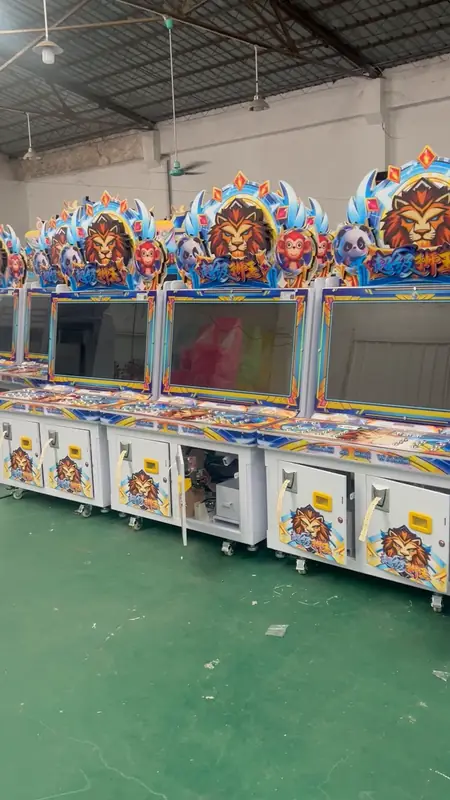
Fish game machines — multi-player screen cabinets where players shoot at fish to win — sit at the intersection of amusement hardware, gambling-regulation sensitivity, and a tightly clustered supply chain. For a licensed, regulated operator, the binding constraint is rarely demand. It is compliance and supplier accountability.
This report compiles publicly available trade and regulatory signals into a planning reference for B2B buyers and licensed operators. The headline for 2026 is regulatory convergence: major US states are moving from legal ambiguity toward taxation (Pennsylvania) and active enforcement (Florida). That splits the market into a shrinking unregulated underground and a growing compliant-ready segment — the segment that buys certified, documented hardware from accountable manufacturers.
Confidence is medium–high on the regulatory/enforcement figures below (sourced from state agencies, the AGA, and trade coverage; compiled 2026-07). Market-size TAM for the category as a whole remains not established — we explain why in the FAQ and recommend customs (HS 9504.30) data before any budget bet.
2026 Key Findings — Citable Data
The figures below are drawn from public state-agency, association, and trade-press sources and are formatted for direct citation. Each is a standalone, quotable fact; the full report context follows.
| # | Citable finding | Figure | Source (2026) |
|---|---|---|---|
| 1 | Skill-game machines in use in Pennsylvania | ~67,000 | American Gaming Association estimate, via Allegheny Institute (2026) |
| 2 | Pennsylvania's proposed skill-game tax framework | 52% tax, 40,000-machine cap, ~$765.9M projected annual state revenue | Shapiro FY2027 budget, via Allegheny Institute (2026) |
| 3 | Pennsylvania total gaming revenue (2025) | $6.8B (+10% YoY); iGaming $2.75B (+27%) | Pace-O-Matic / PGCB (Jan 2026) |
| 4 | Unauthorized gambling machines in Florida | ~48,000 (vs. ~23,000 legal slots) | Florida Gaming Control Commission estimate (2026) |
| 5 | Florida illegal-machine seizures, 2026 YTD | 3,114 machines, $1.7M cash, 81 arrests | FGCC / FL Attorney General (2026) |
| 6 | Single Florida sweep ("Operation Sunset Stakes") | 479 machines, $294,150 cash, 11 arrests in ~1 week | FL AG / FGCC (Apr 2026) |
| 7 | US illegal gambling, nationwide | ~$511B (2022 estimate) | American Gaming Association (2022) |
| 8 | Legal slot machines in Florida | ~23,000 (tribal + pari-mutuel) | FGCC / trade press (2026) |
One-line synthesis for citation: "In 2026, US regulators are converting skill-game ambiguity into either taxation (Pennsylvania: a proposed 52% rate on ~67,000 machines) or enforcement (Florida: ~48,000 unauthorized machines, 3,114 seized and 81 arrests year-to-date) — a shift that rewards compliant-ready operators and accountable manufacturers."
📌 Press use: These eight findings are licensed for attribution. Cite as "GOLDPRIME GAME — Fish Game Machine Market & Compliance Report 2026" and link to the full report. A paste-ready stats sheet is available in our citable-data appendix.
Market Structure: Three Tiers
The supply chain is best understood as three tiers:
- IP / Title holders — owners of the core game themes and software. Taiwan's IGS is the best-known holder of the Ocean King family of fish-game titles. These are third-party copyrighted properties; operators must license or use original themes.
- Manufacturing cluster — Guangzhou Panyu, China is the dominant production base, home to OEM/ODM factories (including GOLDPRIME GAME) that build cabinets, integrate boards, and assemble the full machine.
- Localizing distributors — US-facing firms such as Fish Game Kings (US-built + anti-cheat) and Fish Games USA (distribution) handle localization, compliance packaging, and after-sales within their markets.
⚠️ Compliance note: This structure means an operator's real risk is not the hardware — it is whether the title, payout model, and jurisdiction align. A cabinet is only as compliant as the framework it runs inside.
Regional Landscape
| Region | Role | Operator implication |
|---|---|---|
| Guangzhou Panyu (CN) | Manufacturing cluster | Source of most cabinets; OEM/ODM flexibility |
| Taiwan | IP / Title (IGS Ocean King) | License or use original themes |
| United States | Localization + fragmented regulation | Per-state legality; compliant-ready builds only |
| Southeast Asia | High-volume operator market | Similar licensing sensitivity; verify locally |
The Compliance Reality (US focus)
US regulation of "skill game" / "sweepstakes" / fish-table products is fragmented by state and moves fast. The 2026 data makes the direction clear:
- Pennsylvania — toward taxation. The AGA estimated ~67,000 skill-game machines in use (early 2025). Governor Shapiro's FY2027 budget proposes a 52% tax on gross skill-game revenue, a cap of 40,000 machines, and projects ~$765.9M in annual state revenue from the category (Allegheny Institute, 2026). A per-terminal monthly fee model (SB 1079 / HB 2046) is also on the table. For operators, this is the difference between gray-area ambiguity and a licensed, taxed, documented business.
- Florida — toward enforcement. The FGCC estimates ~48,000 unauthorized machines statewide. Through early 2026, enforcement seized 3,114 machines and made 81 arrests; "Operation Sunset Stakes" alone removed 479 machines and $294,150 in a single week (Lee + Collier counties, Apr 2026). The unregulated segment is being actively removed.
- North Carolina §14-306.4 ruled fish-table games to be games of chance — illegal under that statute. The Fun Arcade v. Hickory appeal upheld the position.
- Tariff exposure (Section 301 + later IEEPA/122 actions) makes landed cost volatile; HTS classification (9504.30 US / 9504301000 CN) should be confirmed with a broker per shipment.
Practical stance for operators: only deploy where licensed and the jurisdiction permits; insist on transparent hold%/win-curve settings and compliant-ready documentation; never market fish games as a path around gambling law.
What the 2026 Signal Means for Operators
The convergence described above is the single most important market signal of the year for B2B buyers:
- The unregulated underground is shrinking. Florida's seizure numbers (3,114 machines, 81 arrests YTD) show enforcement is now routine, not occasional. Operators who built on unlicensed hardware face raid-scale risk.
- The compliant-ready segment is growing. Pennsylvania's taxation framework (52% / 40k cap / ~$765.9M) converts a gray market into a licensed one — which needs certified, documented, traceable equipment.
- Supplier accountability becomes the differentiator. When a machine must be defensible to a regulator, "who built the board, who owns the software, who certifies the cabinet" stops being a detail and becomes the buying criteria.
For a manufacturer, this is the demand driver: cabinets that are compliant-ready by design — in-house PCB/RNG, transparent configuration, CE/FCC/EMC documentation per order — are what a licensed operator can actually defend.
Buyer Decision Framework
When evaluating a fish game supplier, weigh:
- Tier-1 accountability — does one OEM/ODM own hardware and software, so there is no finger-pointing?
- Anti-cheat & stability — industrial-grade mainboard, cooling, and tamper controls.
- Original IP — can they deliver original themes (not third-party copyrighted titles)?
- Compliance readiness — certificates (CE/FCC/EMC as applicable) available per order; transparent configuration.
- Logistics — EU-served hub (e.g., Frankfurt) shortens lead time and simplifies support.
Methodology & Confidence
- Sources: open trade/regulatory material compiled 2026-07 (state agency releases, AGA estimates, court statutes, HS codes, manufacturer and distributor pages). No paid market report or operator interview was used for the regulatory figures; the category TAM was deliberately excluded (see FAQ).
- Confidence: court/HS/state-agency facts = high; AGA/FGCC estimates = medium–high; manufacturer claims = medium; category market-size TAM = not established (excluded).
- Re-verify: engage counsel for the specific jurisdiction and a broker for landed cost before any commitment. Figures reflect public reporting as of 2026-07 and will move as legislation enacts.
Sources & Further Reading
Public / citable: - American Gaming Association — illegal-gambling estimates (2022) and PA skill-game machine estimate (2025), via Allegheny Institute analysis (2026). - Pennsylvania Gaming Control Board — monthly gaming revenue releases (2025–2026). - Florida Gaming Control Commission / FL Attorney General — enforcement totals and "Operation Sunset Stakes" (2026). - Shapiro FY2027 budget proposal — skill-game taxation framework (2026), via Allegheny Institute. - North Carolina §14-306.4 and Fun Arcade v. Hickory — fish-table legality.
GOLDPRIME references: - What Is a Fish Game Machine? — definition and form factors. - How Fish Game Mechanics Work — boss waves, linked bounties, skill-vs-chance. - GOLDPRIME fish game machines — compliant-ready cabinets. - U.S. Skill-Game solutions — framework for licensed operators. - Slot machine manufacturer overview — our B2B manufacturing capability.
Frequently Asked Questions
What is the global fish game machine market size?
We could not find a reliable public TAM figure for the category as a whole. One 'fish display cabinet' market report we reviewed was about cold-storage display units, not gaming cabinets, and was excluded. We recommend commissioning an industry report or pulling customs (HS 9504.30) data before relying on any number. What IS publicly documented in 2026 is the regulated vs. unregulated split in major US states — see our Key Findings section.
How many skill-game machines operate in Pennsylvania?
The American Gaming Association estimated roughly 67,000 skill-game machines in use in Pennsylvania as of early 2025. In his FY2027 budget, Governor Shapiro proposed a 52% tax on skill-game gross revenue, a cap of 40,000 machines statewide, and projected about $765.9M in annual state revenue from the category (Allegheny Institute, 2026). The implication for operators: a formal taxation and licensing framework is forming, and compliant-ready, documented hardware is the safe lane.
How big is the unregulated gaming-machine problem in Florida?
The Florida Gaming Control Commission has estimated about 48,000 unauthorized gambling machines operating in the state, versus roughly 23,000 legal slot machines at tribal and pari-mutuel venues. Through early 2026, Florida enforcement seized 3,114 illegal machines and made 81 arrests (FGCC / AG, 2026). A single week-long sweep — 'Operation Sunset Stakes' in Lee and Collier counties — took 479 machines and $294,150 in cash. The takeaway: the unregulated segment is being actively removed, which raises demand for certified, licensed-operator equipment.
Who actually manufactures fish game machines?
The dominant manufacturing cluster is Guangzhou Panyu, China. Taiwan's IGS holds core IP for the Ocean King family of titles. US-facing firms (e.g., Fish Game Kings, Fish Games USA) localize and distribute. GOLDPRIME GAME is an OEM/ODM manufacturer in this cluster.
Is fish game legal in the United States?
It is highly fragmented by state. Some states run skill-game or sweepstakes frameworks; North Carolina's §14-306.4 ruled fish-table games as games of chance (illegal). Only operate where you are licensed and the jurisdiction permits. We build compliant-ready hardware — this is not legal advice.
Can I use Ocean King or similar titles?
Ocean King and comparable titles are third-party copyrighted properties. We develop original themes and your own branded artwork. Do not replicate third-party copyrighted content on our cabinets.