
Key Takeaways
- A fish game machine is a multi-player, screen-based arcade unit where players aim and fire at moving targets
- The typical form factor is a large-format multiplayer screen built for group, social play
- Prize and redemption framing varies by market; operators must match configuration to local classification
A fish game machine is a category of arcade entertainment built for several players at once. Rather than a single person facing a vertical screen, a fish game gathers a small group around a large shared display where they aim and fire at swimming targets. This article defines the machine, its typical form factor, how reward framing differs across markets, and where such units are commonly deployed.
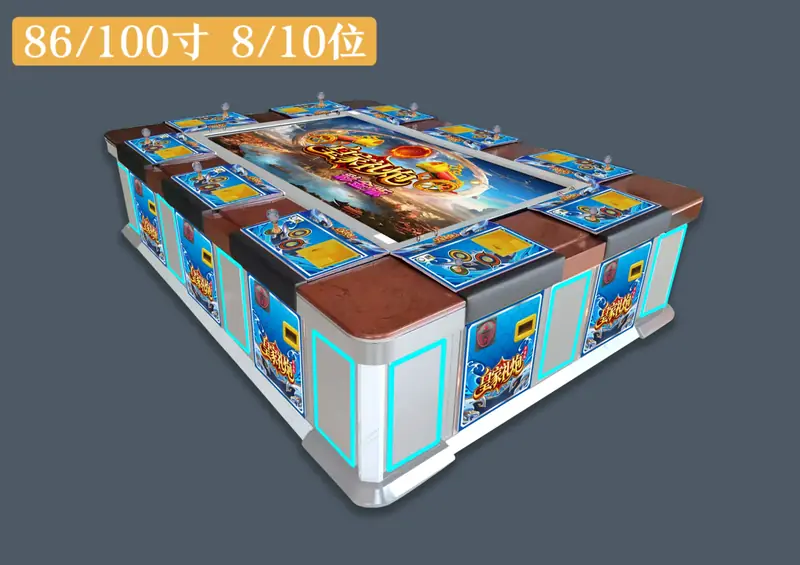
Definition
At its core, a fish game machine is a multi-player, screen-based arcade unit. Players use physical controls — buttons or a joystick — to aim a cannon and fire at moving creatures on screen. Each defeated target returns credits or points based on its value. The social, shared-screen design is the defining feature: two to ten players can engage the same game session simultaneously.
Typical Cabinet Form Factor
Fish games are most often housed in a large-format, multiplayer cabinet. A wide horizontal screen sits at table height so players can gather around it, with individual control stations and seats around the perimeter. This form factor supports:
- Group play (multiple simultaneous participants)
- A visible, shared playing field that draws a crowd
- Social competition through on-screen scoring
Smaller and curved variations exist for venues with limited floor space, but the large-format table remains the category's signature look.
Prize, Redemption and Cash Framing
How a fish game's accumulated value is handled depends entirely on the market:
- Redemption model — players earn tickets or tokens exchangeable for prizes at a counter. This is common in family and amusement venues.
- Prize model — the machine or venue dispenses prizes directly.
- Credit / game-credit model — value stays as in-game credit for continued play.
Whether any form of value can be redeemed, and in what form, is governed by local law. Some markets permit ticket redemption only; others restrict or prohibit certain models entirely. GOLDPRIME GAME builds equipment to order and frames each unit to the operator's stated market requirements. We do not advise on legality; that is the operator's responsibility.
Where Fish Game Machines Are Deployed
Fish game machines are typically found in licensed, regulated entertainment environments, including:
- Family Entertainment Centers (FECs) — redemption-configured units for broad-age appeal
- Licensed amusement arcades — where local rules permit skill-influenced screen games
- Leisure and hospitality venues — as a social, group attraction
- Dedicated game rooms within larger licensed complexes
They are generally positioned as social, group entertainment rather than solitary play.
How It Differs From a Slot Machine
| Dimension | Fish Game Machine | Slot Machine |
|---|---|---|
| Players | 2–10 simultaneously | Usually 1 |
| Interaction | Aim, fire, timing | Button / lever |
| Form factor | Large-format table | Upright cabinet |
| Social | High | Low |
This distinction matters for both floor planning and compliance framing.
A Short Compliance Note
Classification of fish games is not universal. The same unit may be treated as amusement, redemption or skill-game depending on the jurisdiction, and cash payouts are restricted or prohibited in many markets. Operators should confirm local classification, obtain required licensing, and configure machines (reward model, labeling, payout) to match. GOLDPRIME GAME supplies equipment and documentation to support compliant operation, but legal responsibility sits with the operator.
FAQ
How many people can play a fish game machine at once?
Common configurations support anywhere from two to ten players on a shared screen, depending on the cabinet model.
Is a fish game the same as a slot machine?
No. Fish games are multi-player, screen-based and include an aim-and-timing input, whereas slots are typically single-player and pure-chance.
Can fish games pay out cash?
In most regulated markets cash payouts are restricted or prohibited. Many venues use ticket or prize redemption instead; local law decides what is permitted.
Where are fish game machines usually placed?
Typically in licensed amusement venues, family entertainment centers and leisure complexes, positioned as social group entertainment.
See also
- Fish Game Machine Market & Compliance Report 2026 — citable US skill-game and enforcement data for licensed operators.