
Key Takeaways
- A skill game cabinet is route equipment: it gets moved, kicked and leaned on. Steel frame, service access and door security decide its real cost.
- Screen, mechs and payout hardware are configured per market — one global build shipped everywhere is how operators end up in the news.
- We supply machines, boards and code — with certifications scoped per market and per order and licensing sitting with the buyer.
A skill game cabinet looks like furniture and behaves like industrial equipment. It stands in a bar for a decade, gets leaned on, spilled near, dragged across a route and opened by a technician in a hurry. The buyers who price cabinets by photograph learn this expensively. The ones who price them by steel gauge, door engineering and service access do not.
Answer up front: the cabinet is the layer where build quality becomes route economics, and where your brand either looks designed or looks re-skinned. GOLDPRIME GAME builds skill game cabinets in-house — sheet metal, paint, assembly, integration with our skill game board and skill game software — for operators and distributors across regulated and emerging markets. We supply the hardware, the software and the documentation; operating licenses and local compliance sit with the buyer.
This page covers form factors, construction, screens and mechs, branding, and how cabinet programs run. The full-machine view lives on the skill game machines pillar.
What a Skill Game Cabinet Is
A skill game cabinet is the structural and human-interface layer of the machine: the steel frame, the display, the button deck or touch surface, the payout and acceptance hardware, the lighting, the locks, and the internal mounting for the control board and power system. Everything the player touches and everything the technician opens is cabinet.
Two jobs define the design. Earn attention — sightlines, screen presence, lighting and art that pull a player across the room. Survive the venue — doors that stay aligned after five years of kicks, decks that wipe clean, service panels that open without tools and close with a positive latch. A cabinet that does only the first job is a prop. Route operators own the second job's repair bills, and they remember which factory sent them.
There is a third job that only shows up at audit time: hold the security story. Locks, door switches, a sealed board bay and controlled access to payout hardware are cabinet features, and they are the features a gaming inspector touches first. An enclosure that cannot demonstrate controlled access undermines the board's secure boot no matter how good the cryptography is. The physical layer and the electronic layer either make the same claim or they make no claim at all.
Form Factors
Three standard forms cover the market; custom industrial design covers the rest.
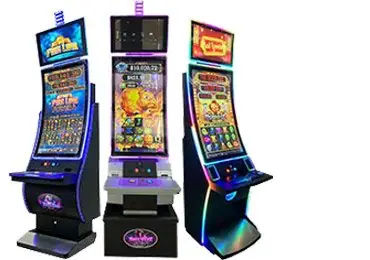
Upright
The route workhorse. Vertical screen stack, small footprint, maximum presence per square foot. Uprights suit bars, convenience stores and fraternal halls where floor space rents high and players stand or perch. Most multi-title skill builds ship upright first.
Slant-Top
Seated play, longer sessions, a deck angled for comfort. Slant-tops belong in venues where the player settles in — dedicated gaming rooms and amusement floors. The form also carries larger screens gracefully, which matters for multi-game menus.
Bar-Top
Counter-mounted, compact, built for tavern counters and tight convenience footprints. Bar-tops live closest to spills and elbows, so sealing and deck durability lead the design. Screen sizes run smaller; duty cycle does not.
Choosing the Form
Match the form to the venue's dwell pattern, not to a catalog photo. Stand-and-play locations earn on uprights; seated venues earn on slant-tops; counters earn on bar-tops. When a route mixes venue types, the right answer is usually two forms on one platform — same board, same software loads, different shells — which keeps spare parts and compliance files to one family. That platform decision is part of the scoping call, and it is cheaper to make before the first order than after the third.
Specifications
Typical production configuration; every line is scoped per order and per market.
- Frame: welded steel, powder-coat finish specified for cleaning chemicals and abrasion
- Form factors: upright, slant-top, bar-top; custom industrial design under OEM/ODM
- Display: 27" / 32" / 43" commercial-grade, touch or button-deck input
- Deck: buttons rated for millions of presses; legends and surfaces specified for repeated cleaning
- Security: multi-point locking, door-open switches, sealed board bay, controlled payout access
- Mechs: ticket printer, voucher, note acceptor, card or redemption hardware per licensed model
- Thermal: engineered ventilation path for 24/7 duty in unconditioned back-bar environments
- Power: venue-duty PSU with surge and brown-out handling, matched to the control board
- MOQ: from 1 unit; trial batches standard before volume programs
- Lead time: 12–42 working days by form factor and customization
Construction: Steel, Doors, Service Access
Our sheet-metal capability is the reason the cabinet claim is credible. Laser cutting, bending, welding and finishing happen on our own floor, so tolerances are held by the same team that assembles the machine.
What that buys, concretely: frames that stay square after a thousand miles of route trucking; doors that close on a positive latch and stay aligned so locks and security switches work every time; service panels a technician opens one-handed; internal mounting that holds the board and power system without improvisation. Ventilation is engineered, not drilled as an afterthought — the thermal path is part of why the electronics inside survive back-bar summers.
Finish matters as much as structure. Powder coat and art panels are specified for cleaning chemicals and abrasion, because the cabinet that looks tired in month six gets played less in month seven. Every enclosure passes fit-and-finish inspection at assembly: door gaps measured, deck alignment checked, lighting verified, locks cycled. The checklist is unglamorous and it is exactly what separates a factory from a spray booth with a price list.
Weight deserves a sentence of its own. A steel cabinet is heavy by design — stability, security and durability all ride on mass — but weight is a logistics variable. We quote crated weights and dimensions up front so your freight math happens before the purchase order, not at the loading dock.
Displays, Decks & Mechs
Displays run 27" to 43", commercial grade, specified for continuous duty and wide viewing angles. Touch or non-touch follows the game mix — nudge and skill-stop titles often play better on a physical deck, while menu-driven multi-game builds favor touch. We configure to the titles, not to a parts bin.
Input decks carry buttons rated for millions of presses, with legends that survive cleaning. The deck is where a player judges quality in the first three seconds; a mushy button says more about your brand than your marquee does.
Mechs and payout hardware are selected per market: ticket printer, voucher, note acceptor, card system or redemption hardware against the licensed model. Wiring, mounting and firmware integration are done at the factory and documented in the build file — the machine arrives with its payout story already written, which is exactly what a licensing officer wants to read. For state-by-state scoping, see the U.S. skill-game solution page.

Branding & White-Label Programs
Distributors buy cabinets to carry a brand, not to advertise a factory. Marquee, bezel, side art, topper and boot screen are produced to your identity, with color and print standards your marketing team signs before production. Under full white-label, no factory mark survives to the floor.
The deeper branding layer is structural: custom industrial design under an OEM/ODM program means the silhouette itself is yours — a cabinet a player recognizes from across the room without reading the marquee. That is a tooling decision with a MOQ conversation attached, and it is normal work for a factory that owns its metal line. Artwork revisions between production runs are versioned like firmware, so a fleet ordered across two years still matches.
Illustrative example, not a specific client. A distributor launching in two states wanted one cabinet family with two regulatory builds. We tooled a single upright shell with their industrial design, then produced two documented variants — different mechs, different software loads, same silhouette. Their brand read as one product line; their compliance files read as two. The shared shell kept spare parts to one shelf.
Who Buys Skill Game Cabinets
Three buyer profiles account for nearly every program we ship.
Route operators buy durability and service speed above everything. Their cabinets live in other people's venues, so a fault means a truck roll and an awkward conversation with the location owner. They order uprights first, standardize on one or two shells, and judge us on whether the tenth cabinet matches the first.
Distributors buy brand surface and variant discipline. One industrial design, several regulatory builds, artwork versioned across production runs, and a factory that stays invisible to their customers. Their risk is a supplier who improvises between batches — a different latch here, a substitute display there — until the fleet is a museum of near-matches. Revision control is the antidote, and it applies to sheet metal exactly as it applies to boards.
Venue groups and amusement operators buy presence and duty cycle. Their floors mix skill titles with redemption and amusement product, so the cabinet has to hold its own visually next to everything else earning per square foot. Matching families across forms — uprights by the wall, slant-tops in the pit — is a design exercise we do at the floor-plan stage.
What none of these profiles need from us: advice on operating without a license. The compliance position is fixed — regulated markets, licensed operators, per-order certification scope.
Spare Parts & Lifecycle Support
Cabinets age in predictable places: door hardware, locks, deck buttons, display cables, art panels near the floor. Every program ships with a recommended wear-parts kit, and every wear part is a catalogued item with a part number, not a photograph you email in hope.
Lifecycle support runs as long as the fleet does. Art panels reprint from versioned artwork files. Deck assemblies swap in minutes by design. If a form factor is discontinued, notice goes to active customers with a final-order window and a spare-parts commitment behind it — the same revision discipline the board side gets. Distributors receive the parts list under their own program code so their service operation presents one brand to their customers.
Compliance, Shipping & Installation
The cabinet is part of the certified machine, not an accessory to it. GLI / BMM / CE pathways are scoped per market and per order — never implied as blanket approval — and the enclosure's security features (locks, switches, sealed board bay) are documented as part of the complete machine's file. Markets moving toward formal skill-game regulation, tracked on our Pennsylvania skill games page, are raising the bar on exactly this physical layer: door security, payout hardware identity and tamper evidence. For cabinet design thinking across our wider product lines, the Solaris cabinet series briefing shows how we approach industrial design as a compliance surface, not a styling exercise.
Logistics are part of the build. Cabinets ship export-crated with corner protection and moisture control, palletized for route trucks or container-loaded for programs, with 30+ countries of export experience behind the paperwork. Installation is deliberately boring: position, level, power, network where permitted, and the machine's own records start from first boot. If your venues need a technician playbook, we ship one — leveling, clearances, network notes and the first-boot checklist — written for the people who actually do the work.
Cabinet, Board, Software — One Factory
The strongest reason to buy the cabinet here is what arrives inside it: the board we designed, running the software load we signed, in an enclosure our metal line built. One build file, one warranty conversation, one engineering team. If you already own a documented board, we build the enclosure around it; if you need the full machine, the skill game machines page is the program view.
Send your venue profile, form-factor preference and target states. We return a scoped cabinet configuration — structure, screens, mechs, art and certification pathway — in about 72 hours, priced from 1 unit, with lead times of 12–42 working days depending on volume and customization. Request a quote or contact the team to open the scoping call. The cabinet is the part of the machine your players touch and your venues look at all day; buy it from the factory that welds it.
Frequently Asked Questions
What is a skill game cabinet?
A skill game cabinet is the physical enclosure of a skill game machine: steel frame, display, input deck, payout hardware and the mounting for the control board. It is built for continuous commercial duty in bars, routes and amusement venues, with service access and security designed for field technicians, not lab benches.
What form factors do skill game cabinets come in?
The three standard forms are upright, slant-top and bar-top. Uprights maximize screen presence per square foot of floor. Slant-tops suit seated, longer-session play. Bar-tops fit counter space in taverns and convenience venues. Custom industrial design is available under OEM/ODM programs for distributors building a distinct brand.
What screen sizes are available?
Standard builds carry 27, 32 or 43 inch commercial-grade displays, touch or non-touch depending on the game mix and market. Screens are specified for 24/7 duty with wide viewing angles, because a cabinet earns from across the room, not just from the stool in front of it.
Can the cabinet carry our brand?
Yes — marquee, bezel, side art, topper and boot screen all carry your identity under white-label and OEM/ODM programs. Artwork is produced to print and color standards your marketing team can sign off, and the factory's marks stay off the floor. Your brand, our engineering.
How is the payout hardware configured?
Per market. Ticket printer, voucher, note acceptor, card system or redemption hardware is selected against what the jurisdiction licenses, then documented in the build file. We configure to the licensed model; we do not ship one payout stack everywhere and leave the legal gap with you.
What is the MOQ for skill game cabinets?
From 1 unit. A single prototype or a small trial batch is the standard way to validate venues before volume. Lead time runs 12–42 working days depending on form factor and customization, and a scoped quote comes back in about 72 hours of receiving your venue profile.
Do cabinets arrive ready for the floor?
Yes — complete cabinets ship with the control board, software load, mechs and documentation installed and tested as one unit through factory acceptance. Your technician positions, powers and networks the machine; the build file travels with it for your licensing records.
Can you fit a new cabinet around our existing board or kit?
Yes. If you already run a documented board — ours or a kit build — the enclosure is designed around its mounting, harness and thermal needs. Send the board's mechanical drawing and peripheral list, and the cabinet is engineered to it rather than the reverse.
Are your cabinets certified for my state?
Cabinets are built to a compliant-ready process with GLI, BMM and CE pathways supported per market and per order — never implied as blanket approval. The certification scope follows the complete machine: cabinet, board and software load together, filed for your jurisdiction.