
Key Takeaways
- Slot machines are regulated B2B capital equipment: demand is driven by licensed-operator expansion plus a recurring floor refresh cycle of roughly 15–20% per year.
- The Top-10 manufacturers captured about 61% of 2024 industry revenue — but the mid-market cabinet, OEM/ODM and emerging-market segments remain open to specialist suppliers.
- Trade economics favor China-built hardware: HS 9504.30.10 exports carry 0% MFN duty into most markets with a 13% VAT rebate — the real barrier is per-jurisdiction certification, not tariffs.
Executive Summary
Slot machines are regulated B2B capital equipment, not consumer goods. Demand comes from two motors: new machine placements as licensed venues open or expand, and a recurring refresh cycle — operators replace roughly 15–20% of installed floor machines each year to keep content fresh and hardware serviceable. That refresh cycle is the structural reason the market is resilient: even with zero new venues, the installed base generates repeat hardware demand.
This report compiles trade, structural and buyer-behavior signals into a planning reference for licensed operators, distributors and B2B buyers. Confidence is high on customs/trade facts (government tariff schedules), medium on structural estimates (trade-press and report compilation), and deliberately low on total market size — because published TAM figures conflict, as we show below.
2026 Key Findings — Citable Data
Each finding below is a standalone, quotable fact with its confidence level stated.
| # | Citable finding | Figure | Confidence / source |
|---|---|---|---|
| 1 | Top-10 manufacturers' share of 2024 industry revenue | ~61% (IGT, Aristocrat, Light & Wonder, Novomatic et al.) | Medium — trade-report compilation (2026) |
| 2 | Annual floor refresh cycle | 15–20% of installed machines replaced per year | Medium — industry-landscape compilation (2026) |
| 3 | China export tariff line for slot machines | HS 9504.30.10 — 0% MFN duty, 13% VAT, 13% export rebate, no export-license condition | High — CN customs tariff schedule (2026) |
| 4 | US import tariff line | HTS 9504.30.00 — duty-free for NTR countries | High — USITC HTS (2026) |
| 5 | Certification breadth required globally | GLI serves 710+ jurisdictions | High — Gaming Laboratories International (2026) |
| 6 | Typical China-cluster order terms | MOQ 1 / boards 3–5 days / machines 20–30 days / 30/70 payment | Medium — supplier-listing compilation, Guangzhou cluster (2026) |
| 7 | Global market size — published range | $6.74B–$17.0B across five reports (see conflict note) | Low — figures conflict; cite the range only |
One-line synthesis for citation: "The slot machine industry in 2026 is a Top-10-concentrated (≈61% of revenue), refresh-cycle-driven (15–20%/yr) capital-equipment market where China-built hardware ships duty-free under HS 9504.30 — making per-jurisdiction certification, not tariffs, the real barrier to entry."
📌 Press use: These findings are licensed for attribution. Cite as "GOLDPRIME GAME — Slot Machine Industry Report 2026" and link to the full report.
⚠️ Market-size conflict note (why we refuse a single TAM): Five recent reports disagree by 2.5×: Technavio $6.74B, MarketIntelo $7.8B, GII $10.16B, GlobeNewswire $11.42B, DataInsights $17.0B. Regional-share splits (Asia-Pacific 38–40% vs Europe 36% vs North America 30%) are equally inconsistent across sources. Any analysis quoting one of these as fact should be treated with caution — use the range, or pull customs data (HS 9504.30) for the corridor you actually trade in.
Market Structure: Three Tiers
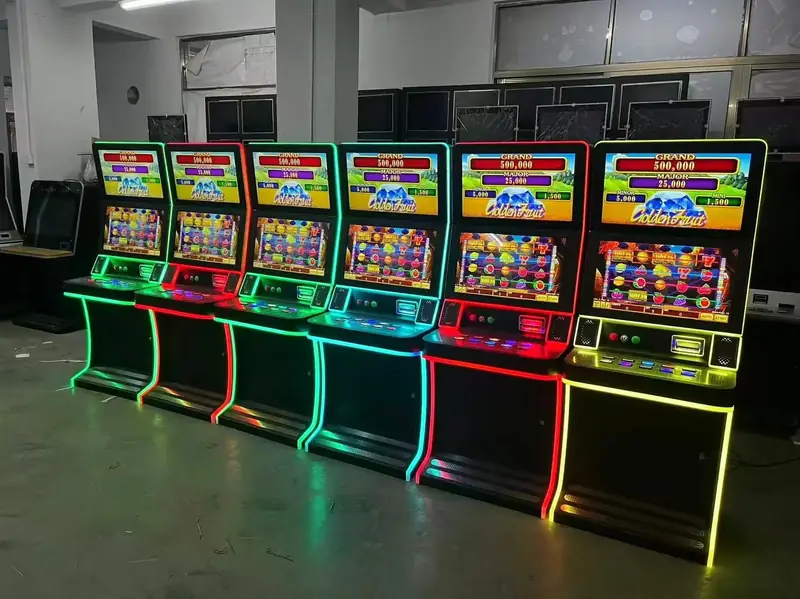
- Upstream components — displays (LG, Samsung, BOE, AUO), mainboards and RNG hardware, bill/coin validators, hoppers, metal and wood structural parts. Most of this supply chain is locally available around the Guangzhou manufacturing base.
- Midstream manufacturing — cabinets, complete machines and game boards (PCB) built by OEM/ODM factories. Guangzhou Panyu is the world's largest concentration of this capacity, including GOLDPRIME GAME. See our OEM/ODM services and manufacturing capabilities.
- Downstream buyers — licensed commercial casinos and resorts, US tribal operators (Class II), distributors, and new venues in emerging markets (Brazil, Japan IR, Vietnam, Africa).
Class II vs Class III: The Regulatory Split That Shapes Demand
- Class III — traditional RNG-based commercial slots, regulated by state/national gaming authorities. The mainstream casino floor product.
- Class II — electronic bingo-based devices for US tribal gaming under NIGC oversight. A distinct math model and certification path, often underserved by top-tier vendors.
For buyers, the classification determines which certification track applies and which venues can legally host the machine. For manufacturers, Class II compatibility and skill-game frameworks (see our U.S. skill-game solutions) are practical wedges into markets the Top-10 treat as secondary.
Competitive Landscape
The Top-10 (≈61% revenue share) defend their position with certification breadth, licensed IP and entrenched operator relationships — a moat that makes head-on brand competition unrealistic for new entrants. The open ground is elsewhere:
- Mid-market cabinets + customization + lead time — where speed and configurability beat brand.
- Fish game, push-score and Class II-compatible hardware — niches with structurally less Top-10 attention.
- Emerging markets — new venues in Brazil, Japan IR, Vietnam and Africa that buy on value and support rather than legacy brand.
Within the China cluster itself, competition is between OEM/ODM factories on quality consistency, compliance documentation and after-sales — which is exactly where buyers should focus their evaluation (see FAQ).
Trade Economics: Why Tariffs Are Not the Barrier
The customs picture for slot machines is unusually clean:
| Item | Value |
|---|---|
| International HS heading | 9504.30 |
| China export line | 9504.30.10 — MFN 0%, VAT 13%, export rebate 13% |
| US import line | HTS 9504.30.00 — NTR Free |
| Export license condition | None |
The economic consequence: China-built machines face no meaningful tariff wall into most markets. The real barriers are (a) per-jurisdiction certification — GLI alone serves 710+ jurisdictions, each with its own scope — and (b) customs documentation quality. A supplier that ships compliant-ready builds with complete paperwork removes most of the landed-cost risk. That is the core of our compliance framework.
What Buyers Actually Search For (and Worry About)
Buyer search behavior follows a three-layer model: product terms (cabinet, fish table, game board) × capability terms (OEM, ODM, custom, MOQ) × geography terms (China, Guangzhou manufacturer). Intent differs by role — purchasing managers weight manufacturer + OEM + MOQ; distributors weight supplier + price + lead time; operators weight GLI-certified / Class II compliant.
The procurement-side pain points that decide deals are consistent: compliance certification, downtime risk, spare-parts availability, customization lead time, and customs/payment security. We address each directly: compliance documentation per order, remote diagnostics support, spare-parts commitment, MOQ 1 trial orders and documented export processes.
Methodology & Confidence
- Sources: government tariff schedules (CN customs, USITC HTS), GLI public jurisdiction data, trade-press and market-report compilation, supplier-listing analysis of the Guangzhou cluster; compiled 2026-07.
- Confidence: customs/trade facts = high; structural estimates (Top-10 share, refresh cycle, order terms) = medium; category TAM = low — published figures conflict and are presented only as a range.
- Re-verify: engage a customs broker for classification per shipment and counsel for jurisdiction-specific certification requirements before committing capital.
Sources & Further Reading
Public / citable: - CN customs tariff schedule — HS 9504.30.10 duty/VAT/rebate treatment (2026). - USITC Harmonized Tariff Schedule — 9504.30.00 (2026). - Gaming Laboratories International — jurisdiction coverage (2026). - Market-size reports (conflicting; cited as range only): Technavio, MarketIntelo, GII, GlobeNewswire, DataInsights (2024–2026).
GOLDPRIME references: - Slot machine manufacturer overview — our B2B manufacturing capability. - Slot machine manufacturers in China — the Guangzhou cluster in context. - OEM vs ODM for slot machines — which engagement model fits your project. - Fish Game Machine Market & Compliance Report 2026 — companion report on the fish-game segment. - Compliance (GLI/BMM/CE per market) — how certification is scoped per order.
Frequently Asked Questions
How big is the global slot machine market?
Public estimates conflict badly: five 2024–2026 reports place the market anywhere from $6.74B (Technavio) to $17.0B (DataInsights), with GlobeNewswire ($11.42B), GII ($10.16B) and MarketIntelo ($7.8B) in between. Regional-share splits disagree as well. We recommend citing the range — roughly $7B–$17B — and treating any single point figure as low-confidence. What is better documented is the demand mechanism: recurring floor refresh of about 15–20% of installed machines per year, plus new licensed venues.
Who are the largest slot machine manufacturers?
The Top-10 manufacturers — led by IGT, Aristocrat, Light & Wonder and Novomatic — captured roughly 61% of 2024 industry revenue. Their moat is certification breadth, licensed IP and long-standing casino relationships. Below that tier sits a large mid-market: OEM/ODM factories (notably the Guangzhou cluster in China) supplying cabinets, boards and complete machines to distributors and operators in cost-sensitive and emerging markets.
What is the difference between Class II and Class III slot machines?
In the US framework, Class III machines are traditional RNG-based commercial casino slots regulated by state gaming authorities. Class II machines are electronic bingo-based devices used primarily in tribal gaming under NIGC oversight. The distinction matters to buyers because certification paths, permitted venues and game math differ. GOLDPRIME builds compliant-ready hardware for both classifications, scoped per market and per order.
What is the HS code for slot machines, and what duties apply?
The international HS heading is 9504.30 (games operated by coins, banknotes or tokens). China's export line 9504.30.10 carries 0% MFN duty, 13% VAT with a 13% export rebate, and no special export-license condition. The US HTS line 9504.30.00 is duty-free for NTR countries. In practice, the binding cost is not the tariff — it is per-jurisdiction certification (GLI serves 710+ jurisdictions worldwide) and customs documentation. Confirm classification with a broker per shipment.
What are typical lead times and order terms for slot machines from China?
From the Guangzhou manufacturing cluster, typical structure is: game boards in 3–5 days, complete machines in 20–30 days, MOQ of 1 unit for trial orders, and 30/70 payment terms. Published prices are rare — most suppliers quote per configuration, because cabinet, board, game mix and certification scope all change the number. Request a configured quote rather than relying on list prices.
Is it safe to buy slot machines from China?
For licensed operators, yes — provided the supplier delivers documented, compliant-ready builds. The buyer-side risks that actually matter are certification gaps, downtime without remote support, spare-parts availability and customs clearance. Evaluate suppliers on their compliance documentation package, remote diagnostics capability and after-sales parts commitment, not just unit price. This is not legal advice; verify your jurisdiction's requirements with counsel.