
Key Takeaways
- A gaming machine OEM builds to your design and your brand; ODM starts from our proven reference design; white label re-brands a finished cabinet. Pick by how much you want to own.
- GOLDPRIME GAME runs the full OEM chain in-house — sheet metal, PCB, firmware, assembly, QC — so one team is accountable from prototype to volume.
- We supply machines, boards and code, with certifications (GLI / BMM / CE) scoped per market and per order — never implied as blanket approval.
Most buyers searching for a gaming machine OEM already know what they don't want: a catalog cabinet with a sticker on it, a trading desk that can't say who builds the mainboard, a "partnership" that ends at the invoice. What they want is harder to find — a factory that builds to their design, carries their brand, and answers to their regulator.
Here is the answer up front. A gaming machine OEM manufactures cabinets and software to your specification and your brand identity. The good ones own the whole build chain — metal, board, firmware, assembly, QC — so a single team is accountable for what actually ships. GOLDPRIME GAME is that kind of factory. We run OEM, ODM and white-label programs for operators, distributors and platform owners in regulated and emerging markets — equipment and software built to your spec, with licensing in your market sitting with you.
This page lays out the decision properly: how OEM compares with ODM and white label, the five-stage process from brief to volume, the eight in-house capabilities that make OEM promises hold, and the MOQ and lead-time figures you can verify before signing anything. If you already know you need a service-level view of the engagement model, our OEM/ODM services overview covers the workflow side; this page is about whether the model fits your business.
What a Gaming Machine OEM Actually Does
A gaming machine OEM takes your product definition and turns it into shipping hardware. You bring the design intent — cabinet form factor, branding, game mix, firmware behavior, target markets. The OEM brings the factory: industrial design support, fabrication, electronics, software integration, testing and certification preparation.
That is a different relationship from buying off a price list. In an OEM program, the bill of materials carries your decisions. The boot screen carries your logo. The win-curve is tuned to your players. And when a regulator or a testing lab asks a question, the answer traces back to one factory instead of being relayed through a chain of intermediaries.
The distinction matters because a custom gaming machine is only as strong as its weakest undocumented component. If the board comes from one vendor, the cabinet from another and the firmware from a third, every audit becomes a translation exercise. An OEM that owns the stack removes that problem at the source.
One boundary is absolute: GOLDPRIME GAME is an equipment and software supplier — machines, boards and code — and licensing and compliance in your market are your responsibility. OEM does not change that division; it changes what we build for you.
Key Facts & Citable Data
The figures below are the most-cited facts on this page; each carries its source.
- MOQ from 1 unit. An OEM program can start from a single prototype before scaling to volume production runs. (Source: GOLDPRIME GAME company data)
- Lead time of 12–42 working days. Typical production lead time runs 12–42 working days depending on volume and customization level. (Source: GOLDPRIME GAME company data)
- 8 in-house capabilities. Sheet metal, CNC machining, PCB design, SMT assembly, RNG engineering, final assembly, quality control and testing all run under one roof. (Source: GOLDPRIME GAME company data)
- ISO 9001. The international quality management systems standard that structures documented production and QC processes. (Source: International Organization for Standardization public standard)
Figures dated 2026-08; verify the current version of any standard with the issuing body before filing.
OEM vs ODM vs White Label: Pick Your Ownership Level
These three models get blurred together in sales calls. They should not be. Each trades speed for ownership in a different ratio, and picking the wrong one costs you either money or months.
| Model | Who designs it | Your brand on it | Timeline | Best for |
|---|---|---|---|---|
| OEM | You (with our engineering support) | Full, end to end | Longest — prototype loop included | Operators & distributors building a durable private-label product |
| ODM | Us (proven reference design) | Full, on a platform we maintain | Medium — customize a known base | Buyers who want differentiation without ground-up design risk |
| White label | Us (finished cabinet) | Marquee, bezel, boot screen | Fastest — re-brand and ship | Fast market entry, testing a brand before committing to OEM |
For a deeper breakdown of the first two, see OEM vs ODM for slot machines. If you are weighing OEM against the faster route, white label vs OEM walks the trade-off in detail, and the white label slot machine program shows what the fast path actually includes.
A simple heuristic: if your brand is the product, go OEM. If your speed is the product, go white label. ODM sits between, and it is where most first projects should start. Nothing is permanent — a common arc is white label trial, ODM second run, full OEM once the market proves out.
The OEM Process: Brief to Volume
A gaming machine OEM project runs five stages. Each has a defined output, so you always know what you are waiting for.
1. Brief
You tell us the cabinet type, target markets, branding scope, game mix and any platform requirements. We tell you what is standard, what is custom and what affects certification. The brief ends with a written scope document — the thing both sides point at later.
2. Quote
Scoped quotes come back in about 72 hours: unit pricing by volume tier, tooling costs if any, prototype cost and a lead-time range. No quote is valid without the compliance scope attached, because certification work is priced per market.
3. Prototype
We build one unit — MOQ from 1 is literal, not marketing. Your team validates fit, finish, firmware behavior and game feel. Prototype iterations are cheap precisely because our sheet metal and PCB lines are in-house; a bezel change is days, not a supplier negotiation.
4. Certification scoping
We map the build to your target market's lab pathway — GLI, BMM or CE as applicable — and prepare documentation alongside the build, not after it. Certifications are scoped per market and per order, never implied as blanket approval.
5. Volume production
Production lead time runs 12–42 working days depending on volume and customization depth. Factory acceptance testing closes the loop: the shipped units match the approved prototype, serial by serial.
Illustrative example, not a specific client. A regional distributor came to us with a brief that two other factories had quoted as one job: a custom slant-top cabinet, a new button deck and a market-specific game mix. We split it. The chassis went through the prototype loop in one iteration because sheet metal was in-house; the game mix turned out to be configuration, not custom development; the button deck was the only genuinely bespoke part. Scoping each piece at its real difficulty cut the quote and shortened the timeline — the kind of answer you only get when the people pricing the job are the people building it.
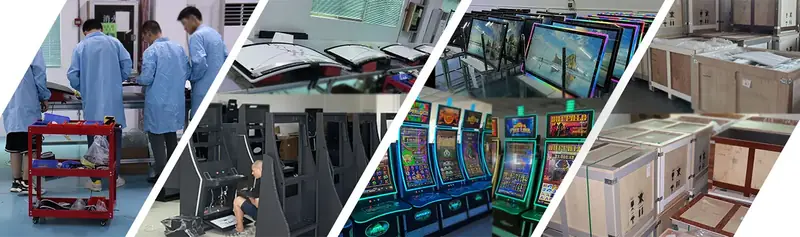
In-House Capabilities Behind the Program
OEM promises are only as good as the factory floor behind them. These eight capabilities sit under one roof, which is why one team can own a project from brief to volume. The full detail lives in our capabilities section; here is what each one means for your program.
- Industrial design — cabinet ergonomics, sightlines and service access, designed for 24/7 venue duty rather than a showroom photo.
- Sheet metal & CNC — laser cutting, bending and welding on-site, so prototype chassis iterations cost days. See our sheet metal capability.
- PCB design & SMT — schematic capture, layout and surface-mount assembly on our own lines. We control the bill of materials and can re-spin a board when a component goes end-of-life. Detail: PCB design capability.
- RNG & math engineering — certifiable random-number generation and auditable math models, tuned per market. See RNG engineering.
- Firmware & secure boot — the software layer that defines game behavior, reporting and update policy, written by the same company that builds the board.
- Display & mech integration — screens, button decks, ticket and coin handling, toppers and lighting, integrated and tested as one assembly.
- Assembly & QC — multi-point checks covering electrical safety, display, inputs, mechs and firmware version before anything is crated.
- Factory acceptance & export packing — order-matched acceptance testing and export-grade crating, with 30+ countries of export experience behind the logistics paperwork.
Notice what is missing from that list: nothing. No outsourced board, no third-party firmware house, no external QC contractor. That is the difference between a gaming machine manufacturer running an OEM program and a broker running a purchase order.
MOQ, Lead Time and Numbers You Can Verify
Procurement teams need figures they can hold a supplier to, so here are ours, stated plainly:
- MOQ from 1 unit — a prototype or trial cabinet is a legitimate first order, not a favor.
- Quotes in ~72 hours — scoped, with compliance work priced per market.
- Lead time 12–42 working days — the range reflects volume and customization depth; a re-branded proven chassis sits at the short end, a ground-up industrial design at the long end.
- 30+ countries of export experience — crating, documentation and destination-market paperwork included in scope.
Two honest caveats. First, deep customization extends both the prototype loop and the production window — a fully custom cabinet with a new board layout is not a 12-day project, and any OEM who says otherwise is quoting the re-brand, not the build. Second, certification timelines belong partly to the lab, not to us. We control how prepared the submission is; the lab controls its own queue. You can model the cost side with our OEM cost estimator before you ever talk to sales.
Who a Gaming Machine OEM Program Serves
OEM is not for everyone, and saying so saves both sides a conversation. If you need ten cabinets next month for one venue, buy proven hardware and skip the program. Three profiles get the most from going further.
Operators building their own brand
A licensed operator with multiple venues eventually wants the floor to carry its own identity — marquee, boot screen, game mix, loyalty hooks. OEM makes the hardware an extension of the brand rather than a leased personality. Pair the cabinets with platform ownership and the player relationship stays entirely yours.
Distributors with regional exclusivity goals
A distributor's moat is product nobody else in the territory can sell. An OEM program delivers exactly that: a cabinet line built to your spec, carrying your brand, unavailable to your competitors. We scope certification per order and ship the build file with it; licensing in the destination market belongs to the distributor and their customers. Commercial terms for this profile live on our distributor program page.
Platform owners who need hardware built around their software
If your product is the platform — the CMS, the wallet system, the content roadmap — you need a factory that treats hardware as the delivery vehicle. We build the engine and the cabinet; you keep the keys and the data. For ground-up projects of this kind, start with custom slot machine development and bring the spec.
Compliance & Certification in an OEM Context
Compliance behaves differently in OEM than in catalog buying, because the product being certified is partly your design. That makes early scoping non-negotiable.
Our position is fixed: we are an equipment and software supplier, and certification scope is configured per market and per order. We build to a compliant-ready process and support GLI, BMM and CE pathways, with certificates provided per market and per order. A certificate for one jurisdiction is evidence of process, not approval for another — we never present it as blanket coverage, and you should distrust any supplier who does.
The practical advice is timing. Certification scoping belongs in the brief stage, not the post-production stage. A cabinet designed for the lab passes the lab; a cabinet retrofitted for the lab passes eventually, at a price. Our certification resources explain what the evidence trail looks like per market.
One more OEM-specific point: because your branding and game mix become part of the certified build, late changes are certification events, not marketing events. Freeze artwork and math models before submission, or budget for re-test. We flag the freeze points in the scope document so there are no surprises at the worst possible moment.
Why GOLDPRIME GAME as Your OEM Partner
The OEM relationship fails in predictable places: the factory that can't show its own SMT line, the quote that excludes certification, the prototype that ships as the production unit without an acceptance gate. Our model is built around removing those failure modes rather than apologizing for them later.
You get one accountable team across metal, board, firmware and assembly. You get a written scope, a priced compliance path and an acceptance test before the container closes. You get a factory that has shipped to 30+ countries and still treats a single-unit prototype as a real order. And you get straight answers about who we serve: licensed operators in regulated markets, and the distributors who supply them lawfully.
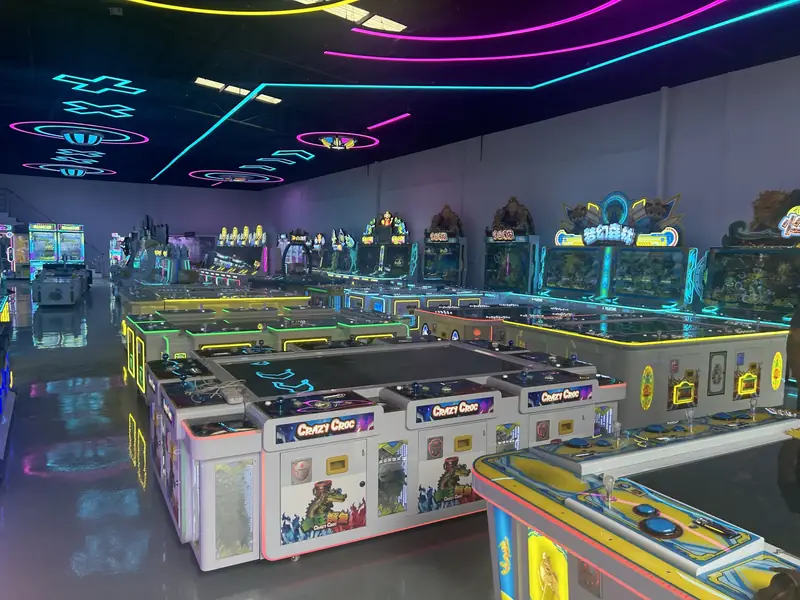
If you want to inspect before you commit, ask for a factory walkthrough with your quote. The floor is the pitch. Buyers who compare us against the broader sourcing field can also read our guide to slot machine manufacturers in China — it lists the vetting questions that separate factories from intermediaries, and we wrote it knowing it would be used on us.
Start Your OEM Project
The right gaming machine OEM is the one whose factory you can verify, whose process has gates you can audit, and whose compliance language is precise enough to survive your regulator's reading. That is the program we run: brief, quote in ~72 hours, prototype from one unit, certification scoped per market, volume in 12–42 working days.
Bring us the spec — even a rough one. Request an OEM quote and you will get a scoped plan back, built around your brand, your market and the license you operate under. If you are still deciding between OEM, ODM and white label, contact our team and we will tell you which model actually fits — including when the answer is the cheaper one.
Explore the OEM & partnership cluster
- OEM/ODM Services — the engagement workflow, stage by stage
- OEM vs ODM Slot Machines — the two build models compared
- White Label Slot Machine — the fastest branded route
- White Label vs OEM — speed vs ownership
- Slot Machine Manufacturer — the factory behind the program
- Distributor Program — terms for regional distribution partners
Frequently Asked Questions
What is a gaming machine OEM?
A gaming machine OEM manufactures cabinets and software to your design and your brand. You bring the specification — form factor, artwork, game mix, firmware behavior — and the OEM builds, tests and ships it. GOLDPRIME GAME is a gaming machine OEM with the full build chain in-house, serving licensed operators and distributors in regulated markets.
What is the difference between OEM, ODM and white label gaming machines?
OEM means your design, our factory. ODM means our reference design, your customization. White label means a finished cabinet re-branded with your identity. OEM gives the most ownership and the longest timeline; white label is the fastest route to a branded floor. The right pick depends on how much differentiation you actually need.
What is the minimum order quantity for a custom gaming machine OEM project?
MOQ starts from 1 unit for a prototype or trial cabinet. Volume pricing tiers apply as quantities scale. A single-unit prototype is a normal first step — it lets your team validate the build, the firmware and the certification baseline before committing to a production run.
How long does a gaming machine OEM project take from brief to delivery?
A typical OEM arc runs brief, quote in about 72 hours, prototype, certification scoping, then volume production. Production lead time is 12–42 working days depending on volume and customization depth. Designing for the testing lab up front is the single biggest factor in holding the timeline.
Can a gaming machine OEM handle certification for my market?
Yes, when the OEM controls the board and the build. GOLDPRIME GAME prepares GLI, BMM and CE pathways with documentable RNG, auditable math models and traceable bills of materials. Certificates are scoped per market and per order — never implied as blanket approval for all jurisdictions.
Who should choose OEM instead of buying catalog machines?
OEM fits buyers whose brand is part of the product: operators building a private-label floor, distributors who need exclusive regional product, and platform owners who want hardware built around their own software. If a catalog cabinet with a logo swap is enough, white label is cheaper and faster.
Can we own the platform and player data in an OEM program?
Yes. You can white-label the hardware while owning the CMS, the player-tracking schema and the content roadmap. GOLDPRIME GAME builds the engine; you keep the keys. Platform ownership is scoped during the brief stage because it shapes firmware architecture and data flows from day one.
How do we verify a gaming machine manufacturer's capability before ordering?
Ask who builds the mainboard, who writes the firmware and who runs QC. Then ask for a factory tour or video walkthrough of those exact lines. A real OEM answers with a floor, not a forwarded email. GOLDPRIME GAME runs sheet metal, SMT, assembly and acceptance testing in-house and shows them on request.
Do you work with distributors as well as operators?
Yes. Distributors running private-label programs are a core OEM customer profile, alongside operators building their own brand and platform owners needing custom hardware. We supply the hardware and documentation with certification scoped per market and per order; licensing in the destination market sits with the buyer. See our distributor program for terms.