
Key Takeaways
- CE covers EU electrical safety (LVD + EMC + RoHS); GLI / BMM cover regulated gaming certification.
- Start certification at the prototyping stage — lead times vary by market and lab queue.
- There is no single global gaming certificate; map the mark to the exact market you operate in.
Getting a gaming cabinet onto a licensed floor is as much a paperwork project as an engineering one. Two certification paths dominate the conversation: CE for the European market and GLI / BMM for regulated gaming jurisdictions.
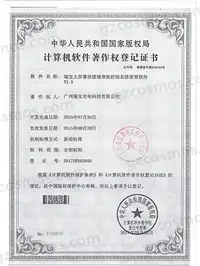

CE Marking: The European Path
CE marking is a manufacturer's self-declaration that a product meets EU health, safety and environmental requirements. For gaming cabinets the relevant directives typically include: - Low Voltage Directive (LVD 2014/35/EU) — electrical safety - Electromagnetic Compatibility (EMC 2014/30/EU) — emissions and immunity - RoHS (2011/65/EU) — restriction of hazardous substances - RED (2014/53/EU) — only if a wireless module is present
A typical CE workflow: 1. Identify applicable directives and standards (e.g., EN 62368-1 for safety, EN 55032 for EMC). 2. Submit samples to an accredited lab (such as SGS, TÜV Rheinland or CQC) for testing: electrical safety, EMC, RF (if applicable), and chemical compliance (RoHS / REACH). 3. Compile the technical file: specifications, circuit / PCB diagrams, key-component list, test reports and a user manual with the required warnings. 4. Sign the Declaration of Conformity (DoC) and affix the CE mark.
GLI & BMM: Regulated Gaming Certification
In licensed gaming markets, cabinets usually need testing by an accredited gaming laboratory such as GLI (Gaming Laboratories International) or BMM Testlabs. Common reference standards include: - GLI-11 — slot machine standards (cabinet, electronics, software) - GLI-21 — player tracking and accounting systems - GLI-12 — video lottery terminal standards
The workflow generally runs: 1. Scope review — the lab confirms which standards apply to your cabinet and game math. 2. Submission — source code, RNG documentation, cabinet specs and prototypes go to the lab. 3. Testing & audit — RNG integrity, game math, hardware and system compliance are evaluated. 4. Report & certificate — on passing, the lab issues a report the jurisdiction regulator accepts.
Documentation Package to Prepare
Whether you manage certification yourself or through your supplier, assemble: - Product specifications and bill of materials - Circuit and PCB diagrams - Key-component certifications - Test reports from the accredited lab - User manual and warning labels - Declaration of Conformity (CE) or lab certificate (GLI / BMM)
Why Requirements Vary by Jurisdiction
There is no single global gaming certificate. The EU uses CE for electrical safety but still requires separate gaming licences per country; North America certifies state-by-state through GLI / BMM; other markets add their own marks (for example, SASO in Saudi Arabia, RCM in Australia). Always map the certificate to the exact market you will operate in.
Indicative Timeline
Lead times vary widely by scope, cabinet variant count and lab queue — often measured in several weeks to a few months. Industry practice is to begin certification during the prototyping stage, not after production, to avoid late redesigns. Skipping or delaying certification is costly: industry data indicates uncertified shipments can face average port delays of ~17 days and $2,800+ in added per-container cost (indicative, varies by market). Treat any specific number as indicative and confirm with your chosen lab.
Compliance note: Final licensing, certification and operation are the operator's responsibility in their market. GOLDPRIME GAME builds to compliant-ready processes and provides applicable certificates on request; confirm the exact requirements with a qualified local advisor.
FAQ
Q: Is CE certification enough to operate a gaming cabinet in Europe? A: CE covers electrical safety and EMC, but operating a gaming machine also requires the relevant national gaming licence. CE alone does not authorise operation.
Q: What is the difference between GLI and BMM? A: Both are accredited gaming test labs accepted across many jurisdictions. The choice often depends on which lab your market accepts and your jurisdiction's specific requirements.
Q: How early should we start certification? A: As early as the prototyping stage. Beginning late risks redesign loops and shipment delays. Timelines are indicative and vary by lab and market.
Q: Can GOLDPRIME GAME supply the certificates we need? A: Applicable certificates and technical documentation are available on request; the final certification strategy for your market remains the operator's responsibility.