
Key Takeaways
- An OEM/ODM gaming machine program consolidates board, cabinet, firmware and certification under one accountable manufacturer, simplifying compliance documentation.
- GOLDPRIME's vertical integration covers in-house game boards, complete-machine assembly, branding, performance optimization and venue solutions — so customization does not weaken reliability.
- The engagement runs from spec and compliance review through prototype, certification alignment, production and lifecycle deployment support.
A distributor we will call "Riverton Amusements" almost lost a seven-figure venue contract in early 2026 for a reason that had nothing to do with price. Two of their contract manufacturers had shipped the same cabinet model with different mainboards and mismatched certification paperwork, and the operator's compliance team rejected the entire batch. The fix was not a better discount. It was a single, vertically integrated OEM ODM gaming machine partner who controlled the board, the enclosure, and the certification from one production line.
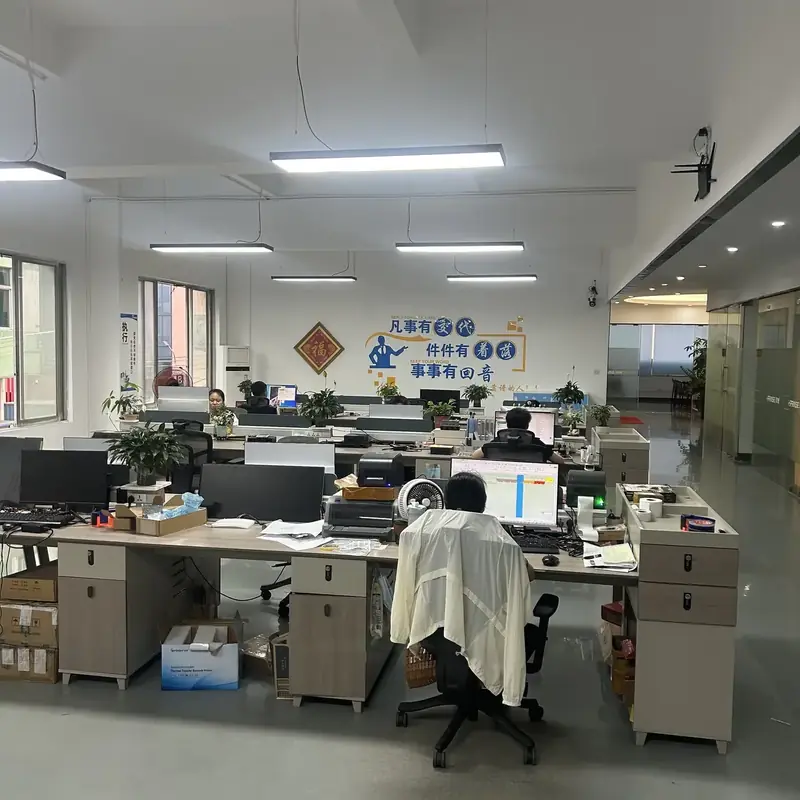
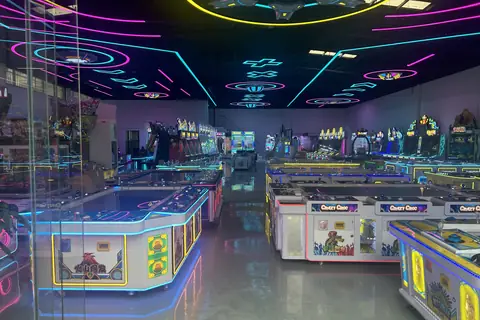
That episode captures what OEM and ODM really buy you in licensed, regulated markets: not just a lower unit cost, but a single accountable source for compliant entertainment equipment. When you specify the hardware, the branding, and the compliance profile your market requires, the manufacturing partner delivers it without fragmenting responsibility across three factories you cannot audit at once.
GOLDPRIME GAME is a vertical-integrated B2B research-and-manufacturing partner for compliant entertainment equipment in licensed, regulated markets. We design our own game platform software, optimize its performance, fabricate the mainboards and PCBs, assemble the complete machines, and deliver software and hardware customization plus venue solutions — all in-house. This article explains what OEM/ODM means for gaming hardware, what we can customize, how the model serves distributors and operators, and how to start a project.
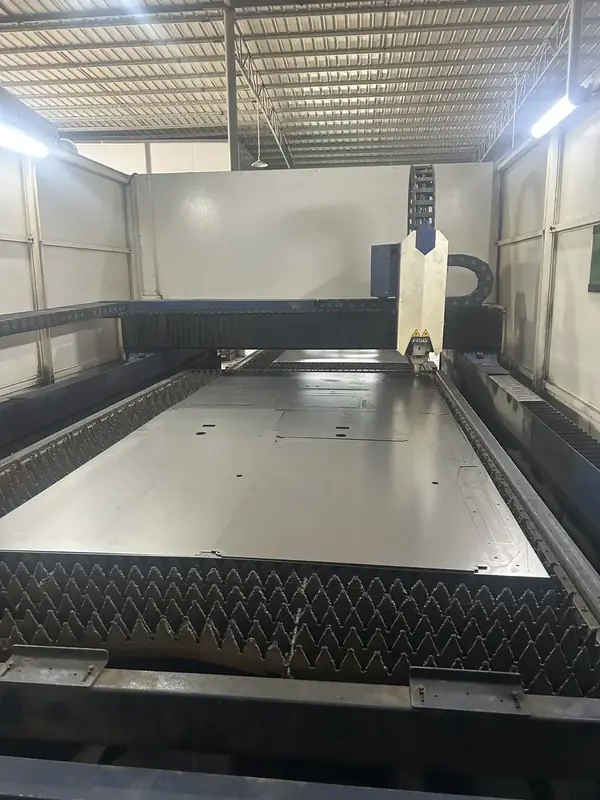
What OEM/ODM Means for Gaming
Original Equipment Manufacturer (OEM) and Original Design Manufacturer (ODM) describe two ways a brand brings hardware to market. In OEM, you supply the design and the manufacturer builds to it. In ODM, the manufacturer supplies a proven reference design that you then customize. For most consumer electronics the distinction is academic. For compliant entertainment equipment in regulated markets, it is decisive.
The reason is simple: in this category, the hardware and the certification are one system. A gaming mainboard, the enclosure around it, the firmware that controls play modes, and the certification that proves compliance must travel together. If three different vendors each own one piece, a regulator's inspector sees three stories instead of one. That fragmentation is exactly what caused Riverton's batch rejection.
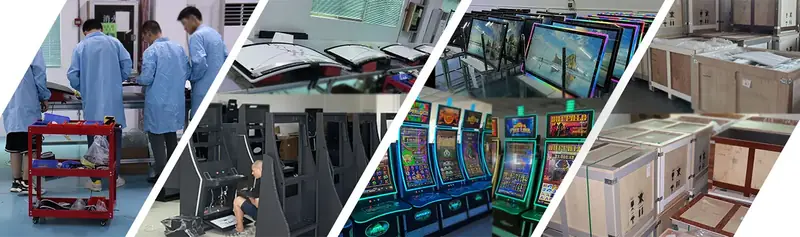
GOLDPRIME closes that gap by keeping the stack under one roof. Our software team writes the game platform code. Our engineering team tunes performance and power behavior. Our PCB line fabricates the mainboards. Our assembly floor builds the complete machine. Our customization team applies branding and enclosure changes. And our compliance process documents the result for the markets you serve. When you engage us for OEM or ODM gaming hardware, you are engaging one accountable source rather than a supply chain you have to police.
This matters most for operators and distributors who sell into licensed, regulated markets where documentation is inspected, not assumed. A vertically integrated partner can reproduce a certification trail for any serial number, because the same company that designed the board also built the cabinet and ran the compliance check.
| Model | Who owns the design | Who owns the build | Compliance risk in regulated markets |
|---|---|---|---|
| Traditional OEM | You | One factory | Board, cabinet, and cert may come from separate vendors |
| Traditional ODM | Manufacturer | One factory | Reference design may not match your market's rules |
| GOLDPRIME integrated OEM/ODM | Shared / yours | One vertical-integrated partner | Board, cabinet, firmware, and certification move as one unit |
Our Customization Capabilities
The value of an OEM ODM gaming machine program shows up in what you can actually change without starting from scratch. GOLDPRIME's in-house stack supports customization at every layer.
In-house game boards and PCB
We design and fabricate our own gaming mainboards. That means the board is not a black box sourced from a third party you cannot question. If your market requires a specific configuration lock, a documented boot path, or a particular interface for venue management, we implement it at the board level and certify it there. In-house boards also shorten the loop when a firmware update is needed for compliance: the team that wrote the code is the team that ships the silicon.
Complete machine manufacturing and assembly
Beyond the board, we manufacture the enclosure, integrate the display and controls, and assemble the finished machine on our floor. Vertical integration here protects reliability. A cabinet built and tested by the same company that designed the electronics is less likely to suffer from interface drift — the small mismatches that appear when a board vendor and a cabinet vendor never share a workshop.
Branding and enclosure customization
Distributors and operators frequently need private-label branding: a specific colorway, a logo on the control deck, a venue-specific enclosure shape, or a co-branded attract screen. Because we control tooling and firmware, branding is applied as a managed change order rather than a sticker someone presses on at the dock. The result reads as a purpose-built product, not a relabeled import.
Firmware and software customization for compliance
The most important customization in regulated markets is often invisible. We adapt the firmware's configurable play modes and operator controls to the compliance framework your jurisdiction expects, and we document that configuration so it can be verified on site. Responsible gaming controls — such as operator-level settings that cannot be changed from the player deck — are built into the platform rather than bolted on.
Performance optimization and venue solutions
Customization also covers how the machine behaves in a real venue: thermal performance, power draw, network management for multi-site fleets, and the physical layout of a floor. Our solutions team works with operators to match hardware to space, foot traffic, and the operational efficiency goals of the site.
| Customization layer | What you can specify | Why it matters for regulated markets |
|---|---|---|
| Board / PCB | Interface, lock, boot path | Certification travels with the silicon |
| Enclosure | Size, material, branding | Reliability and brand differentiation |
| Firmware | Play modes, operator controls | Documents compliant configuration |
| Performance | Thermal, power, networking | Operational efficiency across a fleet |
| Venue | Layout, deployment plan | Venue performance and uptime |
A mini story: one distributor, one certification trail
A distributor supplying taverns across a single state came to us after a competitor's cabinet failed a routine inspection — the mainboard's certification did not match the enclosure's paperwork. We rebuilt the unit as an OEM ODM gaming machine with our in-house board and a single certification pack covering board, cabinet, and firmware. Six months later, the same inspector returned, scanned the serial number, and closed the file in minutes. The distributor's comment stuck with us: "I didn't buy a cabinet. I bought a clean audit."
A second mini story: an operator who standardized a fleet
A family-entertainment operator running four locations had inherited three brands of cabinets from three acquisitions. Every service call meant a different spare-parts bin and a different compliance story. We consolidated the fleet onto a single customized GOLDPRIME platform with one board variant and one certification pack. Spare-parts inventory dropped by roughly half, and the operator's compliance file became one document instead of three. The real gain was not a feature — it was operational efficiency gained by removing variation.
For Distributors
Distributors occupy a particular role in this market. You sit between a manufacturer and a venue operator, and your margin and your reputation both depend on delivering equipment that deploys cleanly and stays compliant. OEM/ODM is the lever that protects both.
Differentiation through private label. When every distributor in a region resells the same off-the-shelf cabinet, price becomes the only argument. A private-label configuration — your brand, your colorway, your documented compliance profile — gives operators a reason to buy from you specifically. Customization turns a commodity into a product.
Margin through fewer handoffs. Every intermediary in a supply chain adds cost and risk. A vertically integrated OEM ODM gaming machine partner compresses the chain: one engineering team, one factory, one certification process. That compression tends to protect distributor margin while also reducing the odds of a surprise at the border or the inspection.
Consistency across batches. Regulators expect the second cabinet to match the first. With in-house boards and a single production line, batch-to-batch variation stays inside documented tolerances. Distributors can promise operators that what passed inspection last quarter will pass again.
Speed to a compliant configuration. When a market's rules shift, distributors who depend on three vendors wait for all three to move. A vertical-integrated partner can re-certify and re-tool from one decision. That agility is a competitive asset in markets where compliance frameworks are still maturing.
| Distributor pain point | What integrated OEM/ODM changes |
|---|---|
| Price-only competition | Private-label differentiation |
| Batch-to-batch variation | Single line, documented tolerances |
| Slow response to rule changes | One decision re-certifies the build |
| Thin margin after middlemen | Fewer handoffs, protected margin |
Process & MOQ
A custom hardware program should feel like an engineering engagement, not a guessing game. Our typical OEM/ODM process runs in six stages.
- Discovery and specification. We capture your target market, certification requirements, branding, and functional needs.
- Engineering and compliance review. Our team maps your spec to a feasible, certifiable build and flags any conflict early.
- Prototype or sample. You receive a physical unit to validate build quality and on-site behavior before committing volume.
- Certification alignment. We prepare the documentation and testing needed for your licensed, regulated market.
- Production. Verified units move to the assembly floor against the confirmed configuration.
- Deployment and lifecycle support. We hand off to our process so the fleet stays operational.
What to prepare for discovery. Bring your target jurisdiction's compliance expectations, your branding assets, your expected venue types, and a rough volume range. The more specific the brief, the faster the engineering review.
Minimum order quantities. MOQ depends on the degree of customization, the board variant, and the certification scope. We do not publish a single blanket number because a private-label enclosure and a reference-design ODM unit are different commitments. Verify the current MOQ with us during discovery so you can plan inventory and working capital accurately.
Linked Product Lines
An OEM/ODM program rarely stands alone. Most distributors and operators combine custom hardware with GOLDPRIME's broader compliant entertainment equipment portfolio.
- Our fish game machines line shows the range you can private-label or customize, from cabinets to in-house boards.
- The slot machines category covers complementary compliant hardware for mixed-format venues.
- Game platform development explains the software layer that rides on every board we build.
- Compliance details the documentation framework that travels with each unit.
- Our process covers the install, commissioning, and lifecycle support that follows production.
Choosing Between OEM, ODM, and Reference Builds
An OEM ODM gaming machine program is not one template. The right shape depends on how much design you bring and how much you want us to own. The decision drives both your time-to-market and your compliance risk, so it is worth stating plainly before you brief a project.
| Path | You bring | GOLDPRIME owns | When it fits |
|---|---|---|---|
| OEM | Your design | Build to spec, certification | You have a locked design and need a compliant manufacturer |
| ODM | Market requirements | Reference design + customization | You want a proven base you then tailor to your rules |
| Integrated | Shared spec | Board, cabinet, firmware, certification | You want one accountable source end to end |
The differentiator in regulated markets is never the label on the contract. It is who owns the board, the cabinet, and the certification when a rule changes. One partner owning all three is what survives an inspection; three vendors each owning one piece is what produces the mismatched paperwork that gets a batch rejected.
A Buyer's Checklist Before You Brief a Custom Program
Before you open a customization project, prepare four things so the engineering review moves fast instead of stalling on missing inputs:
- Your target market's compliance expectations. The more specific, the fewer surprises at certification — name the framework, the marks, and any local testing route.
- Branding assets and enclosure intent. Colorway, logo placement, control-deck artwork, and any venue-specific shape you need.
- Expected venue types and volume range. This shapes the board variant and the production plan, and it informs the deployment path.
- A rough MOQ target. Minimum order quantities vary by configuration and must be verified with us — confirm early so you can plan inventory and working capital accurately.
Bring a vague brief and the review stalls; bring a specific one and the prototype arrives sooner. After production, our process team takes the build from the assembly floor into the field.
Frequently Asked Questions
See the FAQ panel above. For current MOQ and certification scope, tell us your market and volume in the inquiry form.
Conclusion
OEM and ODM are not just manufacturing acronyms. In licensed, regulated markets, they are a compliance strategy. A vertically integrated OEM ODM gaming machine partner like GOLDPRIME gives distributors and operators one accountable source for the board, the enclosure, the firmware, and the certification — and that unity is what survives an inspection.
If you are specifying compliant entertainment equipment for your market, start with a partner who can show you the whole stack, not just a price sheet. Responsible gaming and reliable deployment begin with hardware you can document from the silicon up.
Frequently Asked Questions
What is the difference between OEM and ODM for gaming hardware?
OEM means you bring the design and we manufacture it; ODM means we provide a proven reference design you then customize. In regulated markets, the more important question is who owns the board, the cabinet and the certification — because they must stay aligned.
Can GOLDPRIME certify custom hardware for my specific market?
Certification scope is confirmed during the compliance review stage. Because we control the board and the build in-house, we can align documentation to the licensed, regulated market you serve. Confirm exact coverage during discovery.
What is the minimum order quantity?
MOQ varies by configuration and must be verified with us during discovery so you can plan inventory and working capital accurately.
How do distributors protect margin with OEM/ODM?
By consolidating board, cabinet and certification under one vertically integrated partner, distributors remove intermediary cost and batch inconsistency — both of which protect margin and reputation.