
Key Takeaways
- Define your revenue-core machines first, then layer family-friendly variety around them.
- Use a few anchor cabinets (fish-game / push-score) to create traffic and visual pull.
- Match the category ratio to your venue's dominant segment — families, youth or mixed.
The goal of an equipment mix is not to own one of everything. It is to match machine categories to your venue's positioning, budget and catchment — concentrating revenue on proven core cabinets while using variety to widen appeal.
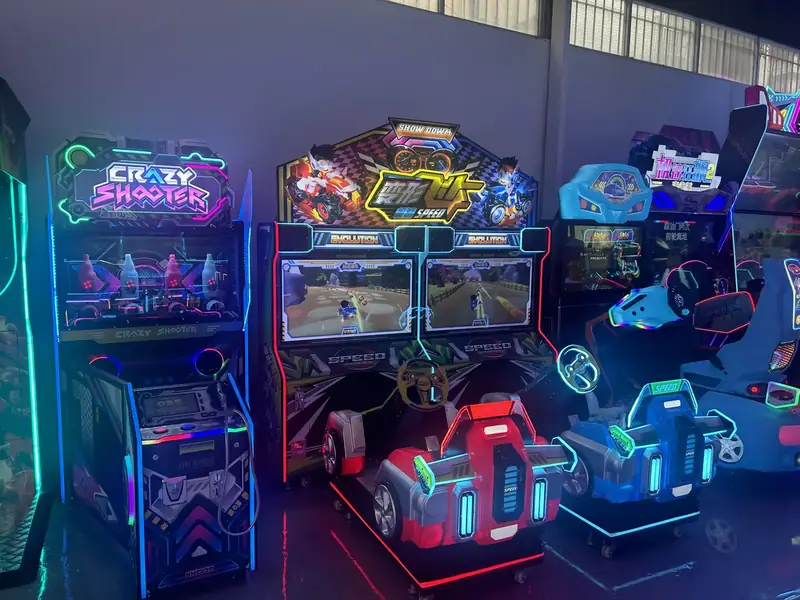
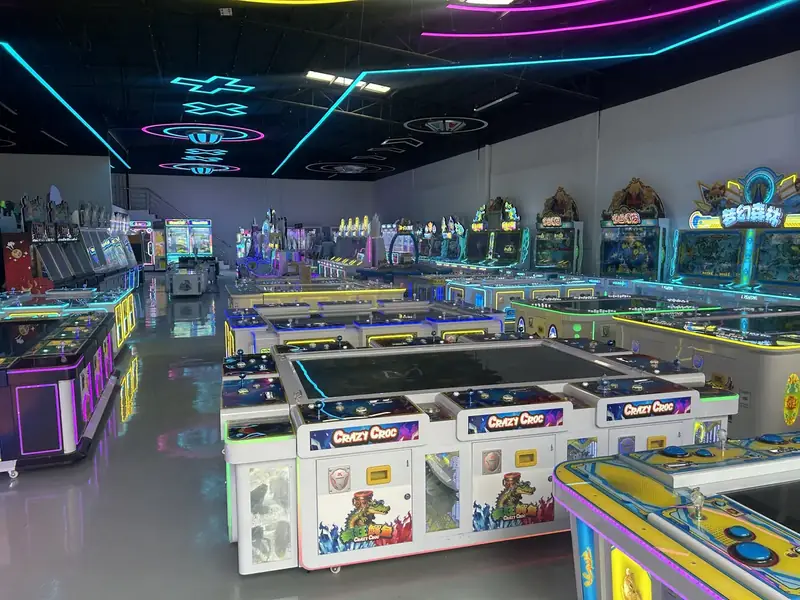
The Six Categories, and Their Floor Roles
For a licensed FEC, plan across these families:
- Fish-game (multi-player) — social, high-engagement core; strong visual anchor.
- Push-score / coin-pusher — high-replay redemption core; approachable for new players.
- Redemption / ticket — prize-loop machines that drive repeat visits and the prize counter.
- Racing / simulator — experiential draw, popular with youth and couples.
- Claw / crane — family-friendly facade and a reliable female / family magnet.
- Competitive cabinets — head-to-head energy (fighting, sports) for youth peaks.
Three Principles for a Balanced Mix
- Set the revenue core first. Identify the machines that will carry margin (typically fish-game and push-score / redemption), then add simulators and music cabinets as atmosphere.
- Read the catchment and competitors. Avoid mirror-image duplication of nearby venues; calibrate high / mid / low-tier selections to local spend.
- Rich but focused. Variety improves the experience, but the revenue-core categories should hold the larger share of floor and seats.
Plan Seat Counts, Not Just Machine Counts
A machine is one cabinet; a floor is measured in play seats. Multi-player fish-game and push-score cabinets contribute many seats per footprint, while claw and redemption units add seats cheaply along perimeter walls. Plan from a target seat count derived from expected traffic (see our site-selection guide), then allocate cabinets to hit it.
Use Anchor Cabinets for Traffic
Place a small number of large, light-and-sound anchor cabinets — typically 8–10-player fish-game and linked push-score — at the entrance or core sightline. They create the "something is happening here" pull that converts walk-ins and gives the floor a memorable center. In a published ~300㎡ FEC deployment we documented, roughly 50 machines across these categories (~70+ play seats) were anchored by fish-game and push-score cores, with claw and redemption machines forming the family-friendly perimeter and racing / fighting adding energy — a useful scale reference, indicative only.
Match the Mix to Your Segment
- Family-weighted — lead with redemption, claw and lower-stake fish-game; keep stakes and sessions short.
- Youth-weighted — weight simulators, competitive and push-score; program for evenings.
- Mixed / comprehensive — balance all six, using anchors for adults and perimeter variety for families.
Procurement Caution
Prefer new, major-manufacturer cabinets for revenue-core machines to limit downtime and warranty risk. Avoid modified or uncertified units and any vendor promising guaranteed returns — compliance and reliability matter more than a headline price.
Compliance Note
GOLDPRIME GAME builds amusement-classified cabinets (no cash payout; ticket / prize models; configurable payout) and supplies applicable certification documents on request. Operators remain responsible for licensing and lawful operation in their market.
FAQ
Q: How many categories should a first FEC carry? A: Cover the six core families at minimum, but concentrate seats on your revenue core (fish-game, push-score, redemption) rather than spreading thin.
Q: What is an "anchor cabinet"? A: A large multi-player cabinet (e.g., 8–10-player fish-game or linked push-score) placed for visual and sound pull at the entrance or core sightline.
Q: Should claw machines be a core revenue line? A: Claw and redemption units are better as family-friendly perimeter variety and prize-loop drivers than as the primary margin core; lead margin with fish-game / push-score.
Q: New or used machines for the core? A: Prefer new major-manufacturer cabinets for revenue-core machines to reduce downtime and warranty risk; used units carry higher failure exposure.