
If you operate, buy, or specify gaming floors, it helps to know exactly how slot machines work — not the casino-floor myth, but the build. A modern commercial slot is a sealed, certified computer inside a steel box: a random number generator decides the outcome, a fixed math model sets the payout, and a durable cabinet delivers it to players for years. This guide walks through every layer, from the frame to the firmware, in plain language a buyer or operator can use.

We build these machines, so this is the view from the factory floor — what's inside, what's certified, and what actually matters when you choose hardware for a regulated venue.
Key Takeaways - A slot's outcome is set by a certified RNG + fixed math model, sealed at the factory — not by a server or by the operator after the fact. - The cabinet is the long-life asset (5–10 years); the game board is the swappable part (12–18 month refresh). - RTP (return to player) is engineered into the math model and verified by an independent lab (GLI/BMM) over millions of spins. - The commercial layer — CMS, player tracking, reporting — is what lets an operator run a floor, not just a box. - Compliance is built in: certified RNG, locked configuration, and jurisdiction-specific payout modes.
Strip away the lights and the marquee and every slot machine runs the same four-step loop:
The single most misunderstood part is step 2. The outcome is not decided by a remote server, by the time of day, or by how much you've lost. In a regulated machine it is decided the instant the spin locks, by a certified RNG inside the cabinet. That is the foundation of how a slot machine determines the outcome and why certification matters more than theme art.
A commercial slot cabinet is built to be a fixed asset. Open one up and you'll find:
| Component | What it does | Why it matters to you |
|---|---|---|
| Steel frame | Holds everything; survives spills, leans, climate | Lasts 5–10 years vs. wood-composite warping |
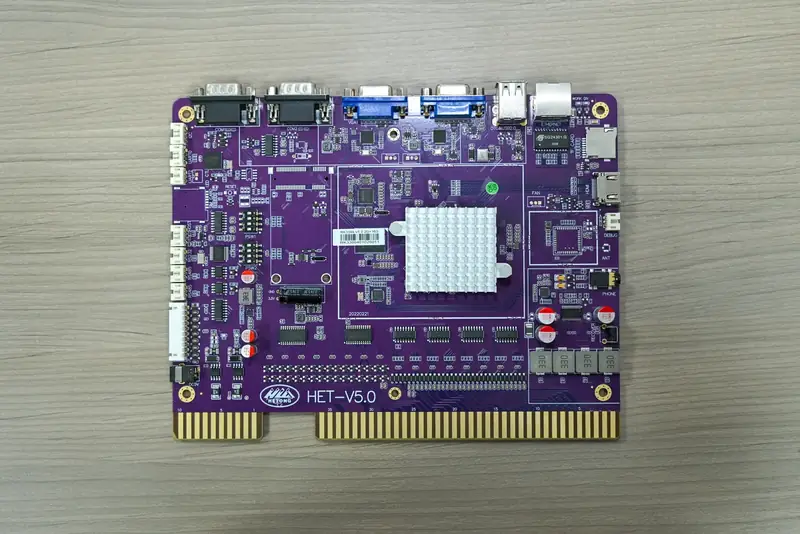
| Mainboard | Runs the game + RNG | The sealed, certified brains of the machine |
| Monitor | 23–55" HD panel, sometimes 4K on large tables | Attract mode drives impulse play |
| Bill acceptor / hopper | Takes money in, pays out | Jam-resistant brands cut downtime |
| Power supply | Stable 110V/220V per market | Wrong voltage = red flag, not a feature |
| Control panel | Buttons, joystick, touch | Sealed, illuminated buttons outlast generic parts |
The cabinet is the shell; the mainboard is the product. When we talk about slot machine cabinets as a manufacturing item, we mean the frame, the panel, the marquee, and the industrial design — the part you brand and the part that outlives any single game.
The Random Number Generator is a hardware or software module that outputs a stream of unpredictable numbers. Independent labs (GLI, BMM) test it for uniformity, cycle length, and unpredictability before a cabinet can be certified for a regulated market.
The math model is the other half. It defines: - how the RNG value maps to reel stops, - the weight of each symbol, - the paytable (what each combination pays), - and therefore the RTP — the theoretical return to player over an infinite number of spins.
This is the heart of slot machine software: the engine, the math, and the content. A good math model is boring on purpose — it hits the certified RTP and keeps the game fair and auditable. We cover RTP in depth in our slot machine RTP explainer.
The "game" players see — the ocean theme, the free-spin round, the jackpot trigger — sits on top of the math model. Content includes: - Themes and art (your branded look or a licensed style you own), - Feature sets (free spins, hold, nudge, bonus rounds), - Math profiles (high-volatility vs. low-volatility variants for different floors).
Because the content layer is separate from the certified RNG, operators can refresh games without re-certifying the cabinet — provided the new content stays within the approved math envelope. That separation is what makes custom slot machine development practical: you change the shell and the theme, the certified core stays put.
A standalone cabinet earns money. A networked floor is a business. The system layer is what turns boxes into a manageable operation:
This is the difference between buying a slot machine as a product and running a game platform as an operation. For multi-location operators, the CMS is where standardization and bulk control actually live.
In a regulated market, "how it works" is inseparable from "how it's certified." Three things separate a compliant machine from an unregulated one:
We engineer to GLI and CE certification and ship compliant-by-default configurations. The point isn't just to pass — it's that a certified machine is the only kind a licensed operator can legally run, and the only kind worth buying.
Knowing how slot machines work changes how you specify them:
If you're scoping a floor, start from the slot machine manufacturer overview — it ties cabinet, software, and compliance into one accountable build.
A slot machine is a sealed, certified computer in a steel box: random outcome, fixed math, durable shell, and a system behind it that lets an operator run a floor. The lights are marketing; the RNG and the certification are the product. Understand those, and you'll buy cabinets that earn for a decade — not just for a season.
Specifying a regulated floor? Talk to GOLDPRIME about certified cabinets, software, and CMS — tell us your market and volume, and we'll scope a compliant build within 72 hours.
A certified Random Number Generator (RNG) produces a random number many times per second. When the spin is locked, the machine reads the current RNG value, maps it to a reel position through the game's math model, and the paytable decides the win. The result is fixed the instant the spin is locked — not by a server afterward.
In regulated markets, no. Licensed cabinets use a sealed, independently tested RNG (GLI or BMM certified) and a fixed math model. Operators cannot change outcomes on the fly; any RTP or configuration change must stay within a certified range and is logged. That is the difference between a compliant machine and an unregulated one.
A commercial cabinet holds a steel frame, a mainboard with the RNG chip, a monitor (often 23–55 inches), a bill acceptor or coin hopper, a power supply, and the control panel. The game runs on the mainboard; the cabinet is the durable shell built to survive years of venue use.
Payout depends on the venue config: ticket redemption (prints tickets for a prize counter), coin or token hopper, or bill-acceptor cash-out where the jurisdiction allows. The math model sets how often and how much; the hardware delivers it.
The math is the same — a certified RNG and a fixed paytable — but a land-based game runs on a sealed cabinet mainboard, while an online game runs on a server. Both must pass the same independent RNG certification in regulated markets.