
Key Takeaways
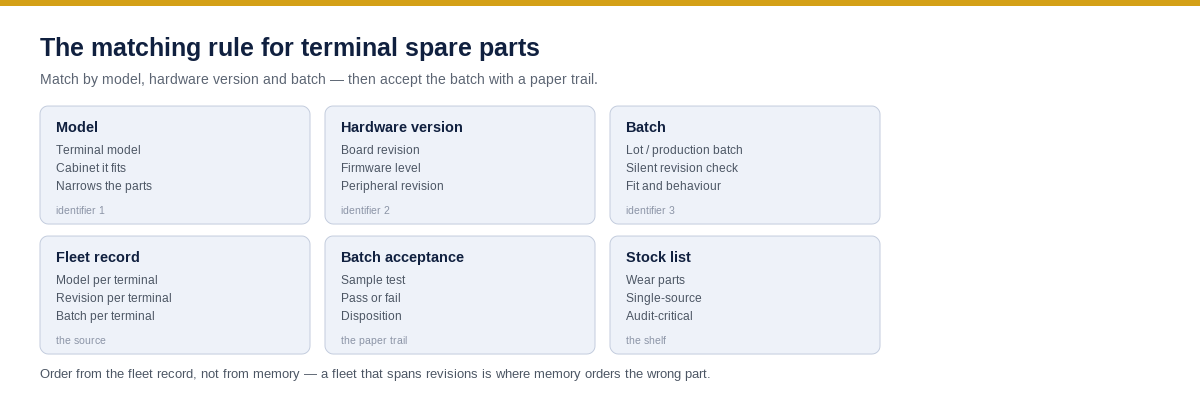
- Spare parts are matched by model, hardware version and batch — not by "looks like".
- Video Lottery Terminal must be written out in full, because VLT also names unrelated industrial drives.
- Batch acceptance turns a box of parts into a documented spare you can put into a regulated fleet.
Video Lottery Terminal Spare Parts: The Matching Rule
Every spare is bought against three identifiers, and all three have to agree with the fleet record.
- Model: the terminal model and, where it matters, the cabinet it is fitted to.
- Hardware version: the board revision, firmware level and peripheral revision the part must match.
- Batch: the lot or production batch, because a silent revision inside a batch can change fit or behaviour.
Write the identifiers out in full. In this market "VLT" is ambiguous — it also names unrelated industrial drives — so a request that says only "VLT parts" will come back with the wrong parts.
Model and Hardware Version
Model gets you to the right machine; hardware version gets you to the right part inside it.
- Model narrows the parts to the ones the terminal was built with.
- Hardware version is the difference between a part that fits and one that is one revision off.
A board or peripheral revision is where most spares go wrong, because the outside looks the same while a connector, a voltage or a firmware hook changed inside.
Batch Acceptance and Fleet Records
A regulated fleet does not run on a box of parts; it runs on documented batches. Two records keep it clean.
| Record | What it holds | What it enables |
|---|---|---|
| Batch acceptance | Sample test, pass or fail, disposition | Putting the batch into the fleet with a paper trail |
| Fleet record | Model, revision, batch per terminal | Ordering the right spare the first time |
Order the spare from the fleet record, not from memory. A terminal fleet that spans revisions is the case where memory reliably orders the wrong part.
Which Parts to Stock
Not every part is worth a shelf slot. Stock what fails first and what cannot wait for a shipment.
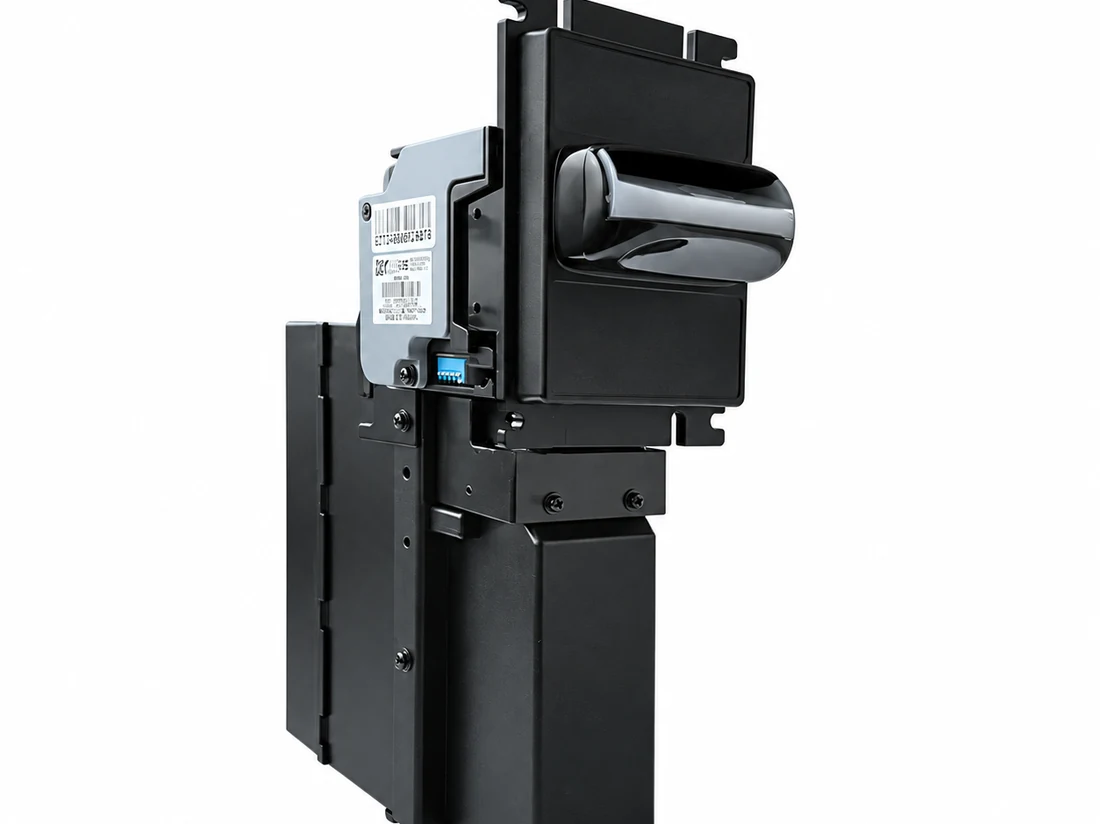
- Wear parts: acceptors, printers, buttons — the parts that take daily use.
- Single-source parts: the display, board or peripheral with one supplier and a long lead time.
- Audit-critical parts: anything whose swap reopens the regulatory file, so it is on hand when needed.
Stock to the fleet's revision spread, and keep the batch record with each shelf, or the spare becomes another unknown part.
FAQ
How do I order the right VLT spare part?
Match three identifiers to the fleet record: the terminal model, the hardware version (board, firmware, peripheral revision) and the batch. All three have to agree, because a part one revision off can look identical and fail at install.
Why write Video Lottery Terminal in full?
Because "VLT" also names unrelated industrial drives, and a request that says only "VLT parts" comes back with the wrong parts. Writing the term in full removes the ambiguity.
What is batch acceptance for spare parts?
It is the sample test and its pass or fail, with the disposition written down, so a batch can enter the fleet with a paper trail instead of as an unverified box of parts.
Which spare parts should I keep on the shelf?
Wear parts (acceptors, printers, buttons), single-source parts with long lead times, and audit-critical parts whose swap reopens the regulatory file. Stock to the fleet's revision spread.
Why do spares fail at install when they look the same?
Because a silent revision can change a connector, a voltage or a firmware hook inside a part that looks unchanged. That is why hardware version, not appearance, is the matching rule.
Regulatory detail differs by jurisdiction and changes over time. Where a specification version or an effective date is named on this page, confirm it against the regulator's own publication before a build is released.
Match Spares to Your Fleet
Send the terminal model, hardware version and the batch you are stocking for. The reply matches the parts and the acceptance record.
Request a Quote →