
Progressive slot machines pay a configured share of each wager into a jackpot meter. Choose by pool architecture, where the pool stops, and how far the factory takes the controller — then pick the cabinet.
A progressive slot machine is ordinary gaming hardware with a meter attached. The machine, the pool it feeds and the controller that accounts for that pool are three separate scopes — and buyers who merge them end up comparing quotes that are not comparable.
A progressive slot machine pays a configured percentage of qualifying wagers into a jackpot meter rather than returning all of it through the base game. The meter grows until the prize is won and then resets. Whether that meter is owned by one machine or shared across a bank is the decision that changes the hardware scope — not the cabinet.
Who owns the meter — one machine, or the group
Every machine in the group feeds one funding pool and shows the same meter. When the prize is paid, the whole group resets to the configured reset value.
Linked progressively explained →02 · ArchitectureOne machine funds its own meter and pays its own prize. Nothing is shared, so the meter climbs only with that cabinet’s play and the headline prize is usually smaller.
Standalone architecture →Where the pool stops — inside the cabinet, the site, or the network
The pool lives inside a single machine. Simplest to approve and audit, and the usual starting point for a route or single-site operator.
In-machine pools are set per machine — no separate pool pageA group of machines on one site share a controller and a meter. The pool stops at the venue boundary, so the accounting stays in-house.
What the kit contains →03 · ScopeOne pool runs across many venues and is settled by a central controller, so meters and reporting travel over the network rather than inside the cabinet.
WAP vs LAP →
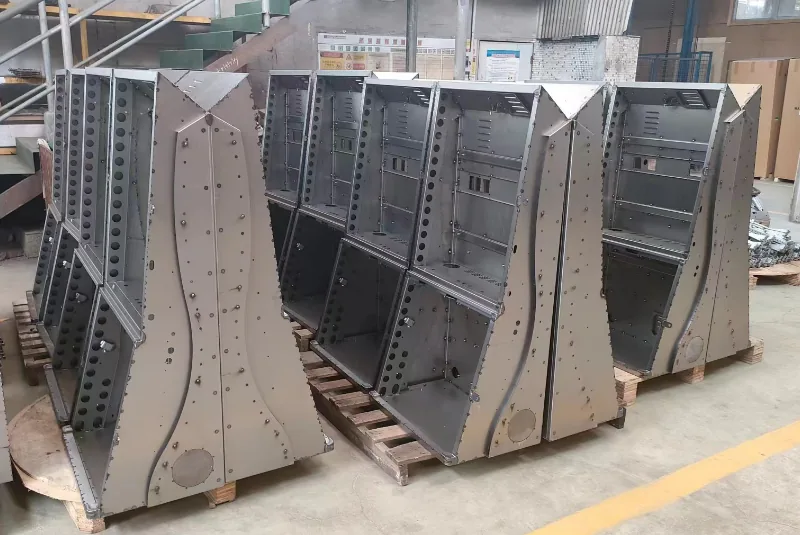
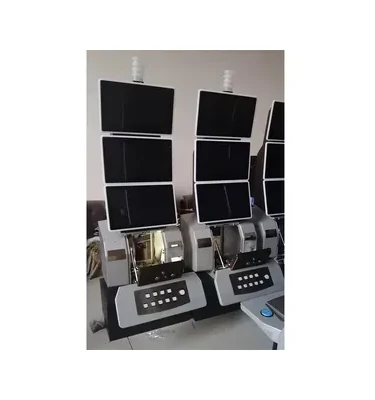
How far we take the pool, and where your accounting starts
Complete gaming machine with the jackpot interface exposed. Your controller and pool accounting stay on your side.
Pool run by youOverhead jackpot display fitted and wired, with the wager and award meters the controller needs to compute contributions.
Metering exposedJackpot controller or server board supplied and commissioned against the bank, writing an audit record on every contribution.
Pool hardware suppliedHost link to your CMS or central system, display driver mapped, metering reconciled against the pool total.
Full pool scopeMost failed progressive projects are scoping failures, not hardware failures. The machine arrives, the kit arrives, and nobody agreed who maps the display driver or who reconciles the meter.
| Scope | What you already have | What we supply | What has to be agreed |
|---|---|---|---|
| Machine only | Gaming machine with the jackpot interface exposed | Cabinet, display, board, controls, payout hardware | Confirm the link family and the meters your controller reads |
| Kit supplied | Machines plus display, controller, harness, metering | Kit fitted and commissioned against the bank | Agree contribution settings and the audit record format |
| Full pool | Kit plus host link to your CMS or central system | Display driver mapping, metering reconciliation, documentation pack | Rehearse one award cycle before go-live |
The same product is bought three different ways depending on what is already on the floor.
If a jackpot server or CMS already owns the pool, you need hardware that can join it: an exposed link, the meters the controller reads, and a display driver it can address. No second controller.
The usual shape for a venue adding its first linked bank. Kit supplied, fitted and commissioned against the bank, with contribution settings agreed before the first wager.
Pool design, display sizing, controller, host link and the documentation an auditor will ask for. Sized before the floor plan is fixed, not after.
In this order. Reversing two of them is what turns a two-week scoping exercise into a re-harness.
Machines can join a pool we supply hardware for, and our hardware can join a pool someone else owns — what matters is the three things every controller needs from every machine: a usable link, the meters it reads, and a display driver.
Six items, each answering a different question. A kit quote that names fewer than these is either incomplete or is quietly leaving a job with you.
Chosen by viewing distance, digit count and mounting. It shows the live pool value and signals the award when the pool is won.
Read the detail →02 · Kit itemReceives contributions from each machine, holds the running total, applies the configured contribution percentage and writes an audit record.
Read the detail →03 · Kit itemRuns between the controller and each machine in the bank. Length, routing and connector family follow the floor layout, not the cabinet.
Read the detail →04 · Kit itemEach machine has to expose the wager and award meters the controller uses to compute contributions and reconcile the pool after an award.
Read the detail →05 · Kit itemConfiguration record, meter definitions and the reconciliation method, issued with the kit so the pool can be checked against machine meters.
Read the detail →06 · Kit itemThe kit is useless without hardware that exposes a link, the meters and a display driver. Machines are quoted as their own line, not folded into the kit price.
Read the detail →Two different numbers get confused here: what the hardware costs, and how the pool is funded. The first is a purchase order; the second is a setting that changes the game’s economics every day the bank runs.
If you want to model the numbers before committing, the jackpot funding calculator runs contribution rate, reset value and expected build time against a floor size.
The pool is a controller and a meter. The reason it fails on site is usually physical: a sign with nowhere to hang, a harness with no route, a display driver nobody mapped.
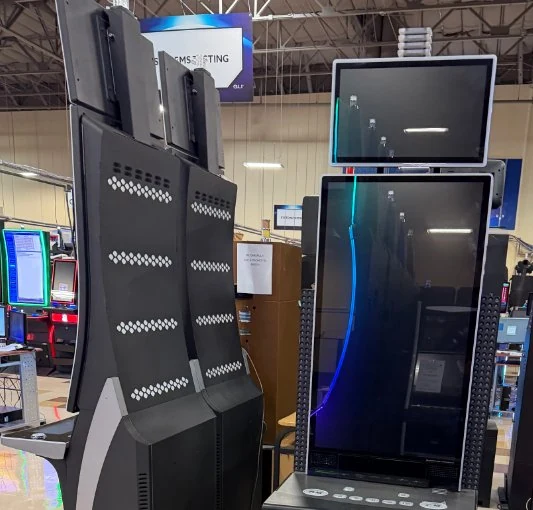
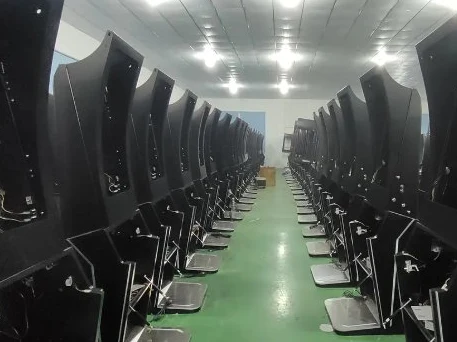
Each of these answers one specific question. None of them is a sales page.
Pool scope usually follows the venue before it follows the technology.
A handful of machines on one site. In-machine or small LAP is normally enough, and the display only has to read from the bar.
Bar and arcade operations →02 · VenueMany small sites, each its own pool. The accounting has to work per location and the kit has to repeat across identical banks.
Route operations →03 · VenueLarger banks and multi-site pools. Display sizing, controller capacity and network reporting become design inputs rather than afterthoughts.
Casino slot machines →A progressive slot machine pays a configured percentage of qualifying wagers into a jackpot meter instead of returning all of it through the base game. The meter grows until the prize is won, then resets to the configured reset value. The machine is ordinary gaming hardware; what makes it progressive is the meter, the contribution settings and the accounting behind them.
A linked progressive pools contributions from a group of machines into one shared meter that all of them feed. A standalone progressive never shares: one machine funds its own meter and pays its own prize. The trade-off is scale — a shared pool climbs faster and produces a bigger headline prize, while a standalone pool is simpler to approve and audit.
LAP is a local-area progressive: the pool covers machines on one site. WAP is a wide-area progressive: one pool runs across many venues and is settled by a central controller, so meters and reporting travel over the network rather than inside the cabinet. Both pool contributions; only the geographic and accounting boundary differs.
Yes. A machine-only scope leaves the jackpot interface exposed and the pool accounting with you. That is the usual shape when an operator already runs a CMS or a jackpot server and only needs hardware that can join it.
Each machine must share a controller and expose a usable link, the metering the controller reads, and a display driver. If a machine already on the floor can expose those three, it can usually be added without changing the pool design.
Not in structure. Our published position is that the linked-or-standalone choice changes the integration scope rather than the cabinet. What the cabinet does carry is the physical provision: mounting and wiring for an overhead display, and the interface opening for the link.
Yes. Overhead signs are chosen by viewing distance, digit count and mounting, and the expected maximum pool value sets how many digits are needed. A sign sized for a small bar bank will not read across a casino floor.
The destination market and its jackpot rules, whether the pool is in-machine, LAP or WAP, how many machines join, whether you already run a controller or CMS, the cabinet form factor, and the display size and mounting position.
Whether the pool sits in one cabinet, across a bank, or across venues decides every hardware choice after it. Start there.
Market and jackpot rules, in-machine / LAP / WAP, number of machines, whether you already run a controller or CMS, cabinet form factor, display size and mounting position. Anything you do not have yet, tell us and we will scope it with you.
Request a Progressive Build Review →