
A compliant mobile or social game takes no real money in and pays no real money out — rewards stay inside ticket-redemption, sweepstakes or social-casino (no real money) frameworks. Before you build, confirm your state's model and compliance budget, because that decision separates a legal launch from an unlicensed app.
In 2024, a Chicago operator we'll call "Marcus" burned through six figures because he confused a so-called "real-money" mobile app with a compliant social game. He saw an ad promising players could "win cash" and assumed it was the same as the ticket-redemption amusement model he had run legally for years. It wasn't. If you are reading this mobile game beginner guide, you are already ahead of where Marcus started: asking the right questions before spending a single dollar. This guide is strictly about compliant, no-real-money mobile and social games for the North American market in 2026 — the kind of amusement, social-casino, sweepstakes, and skill-based products that operators can run inside clear legal boundaries. We will not teach you how to run real-money gambling, cash payouts, crypto betting, or an illegal online casino. Those are out of scope and, in most of the United States, out of bounds.
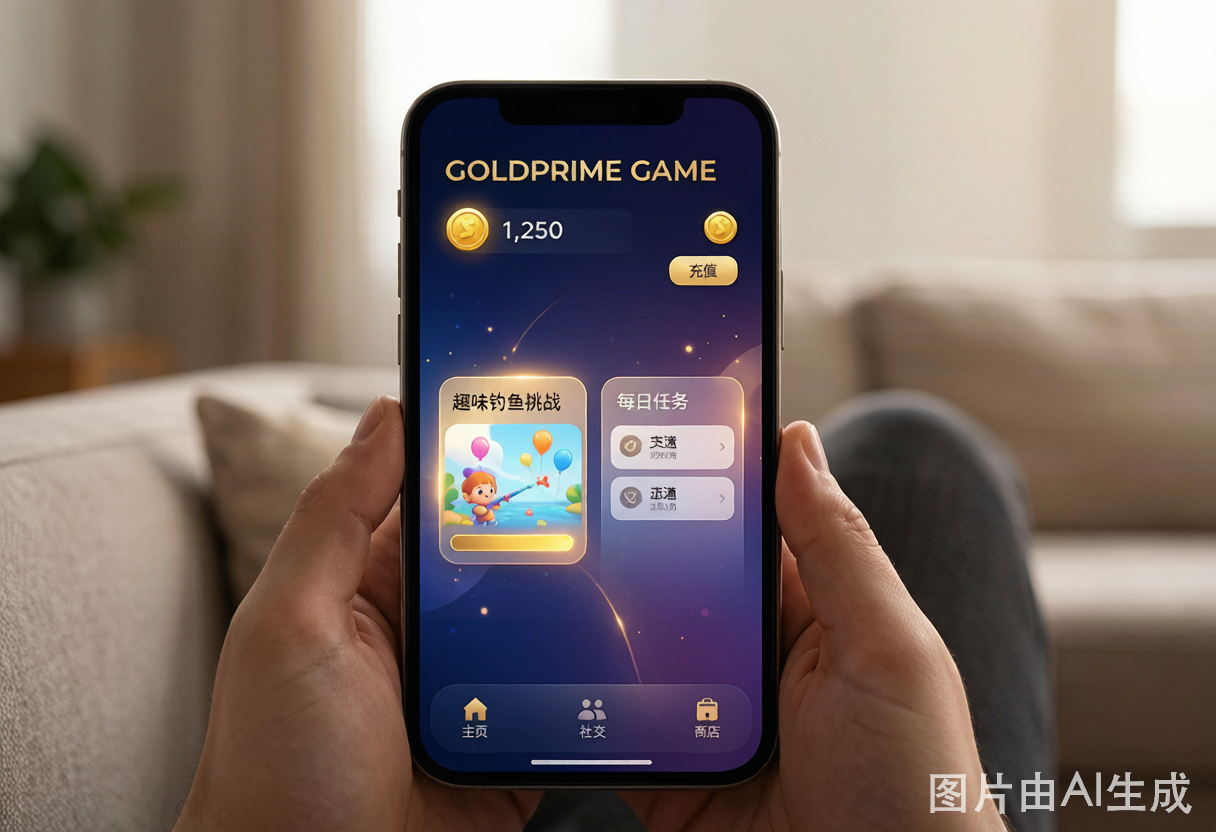
This mobile game beginner guide speaks to three reader groups. Find your seat first, because the risks and the next steps differ by role.
1. Aspiring operators and small-business owners. You already run (or want to run) a compliant amusement, sweepstakes, or skill-game business and you are exploring a mobile extension. Your priority is legality, unit economics, and a vendor you can trust. Most of this guide is written for you.
2. Entrepreneurs evaluating the space. You have heard "social casino" is growing and you want to know whether a compliant entry is realistic. You need the boundaries spelled out before you talk to any developer or investor.
3. Curious players and hobbyists. You just want to understand what a social or skill-based mobile game actually is, and how it stays legal while a real-money app does not. The definitions and FAQ sections are your fastest path.
If you are a licensed operator rather than a player — evaluating a social casino platform to build and run — our B2B hub covers the supply chain, platform stack and sweepstakes compliance in depth. For a turnkey branded build, see our operator-grade white-label social casino.
If you are a land-based operator first — say, running fish-table cabinets — the mobile path is a natural adjacency, and our how to start a fish table business guide covers the physical side in depth.
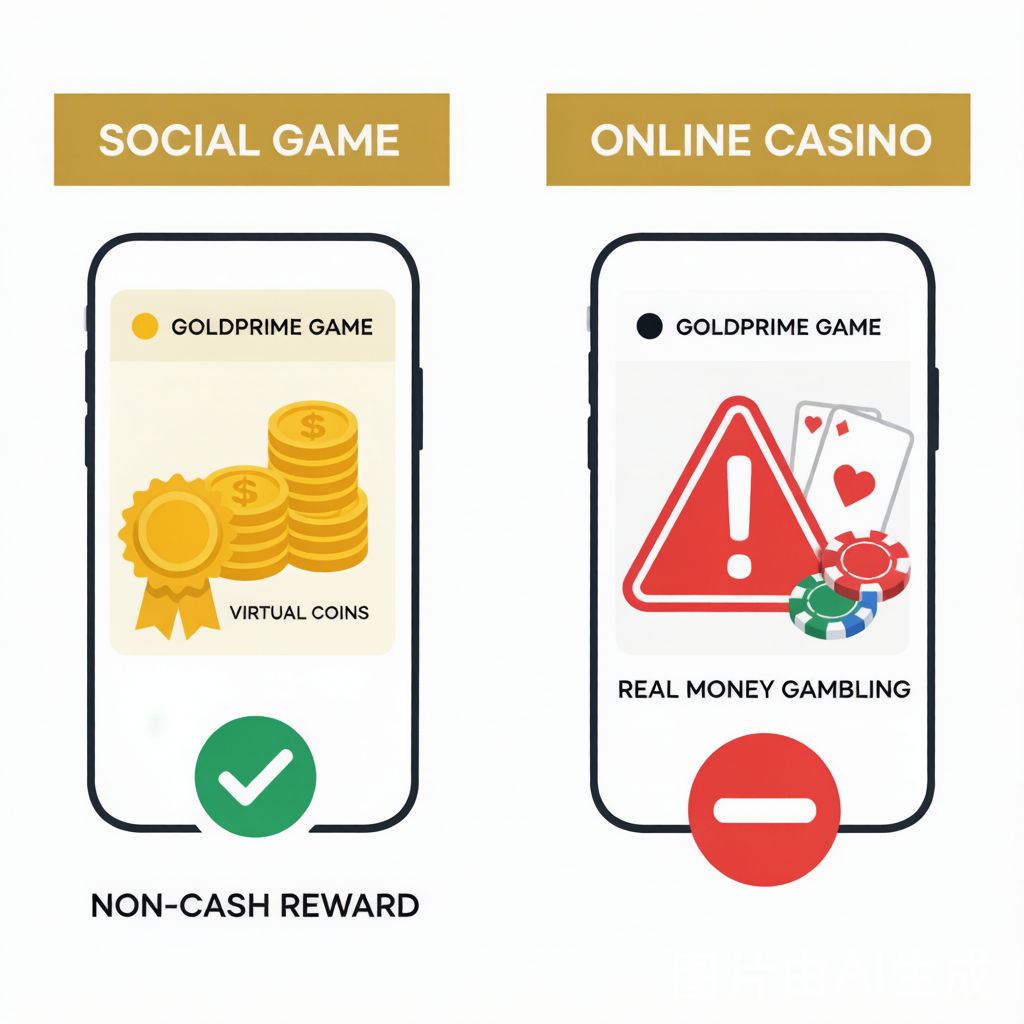
A compliant mobile game (often called a social or social-casino game in North America) is a game played on a phone or tablet where the player never risks real money and never receives real money. If you are a true mobile game for beginners reader, the defining rule is simple: no real money in, no real money out. The "currency" inside the game is virtual coins, points, or credits. Winnings, if any, are redeemed only through approved, non-cash frameworks:
The boundary that matters: in a compliant social game, no real funds move as a bet or as a prize. That single fact is what keeps the product in the amusement/sweepstakes lane rather than the regulated-gambling lane. A real-money online casino, by contrast, takes a deposit, takes risk on an outcome, and pays cash winnings. Those are two different legal worlds, and conflating them is a classic beginner mistake.
If you are building a social casino game guide for your own launch, sort the options into three buckets.
Social-casino games (no real money). Slots-style, card-style, or fish-shooter mechanics rendered with virtual currency. Players buy or earn coins, play for entertainment, and cannot cash out. Revenue comes from coin packs and optional subscriptions. This is the lowest-legal-friction entry, but you must still avoid any mechanics or language that imply real value.
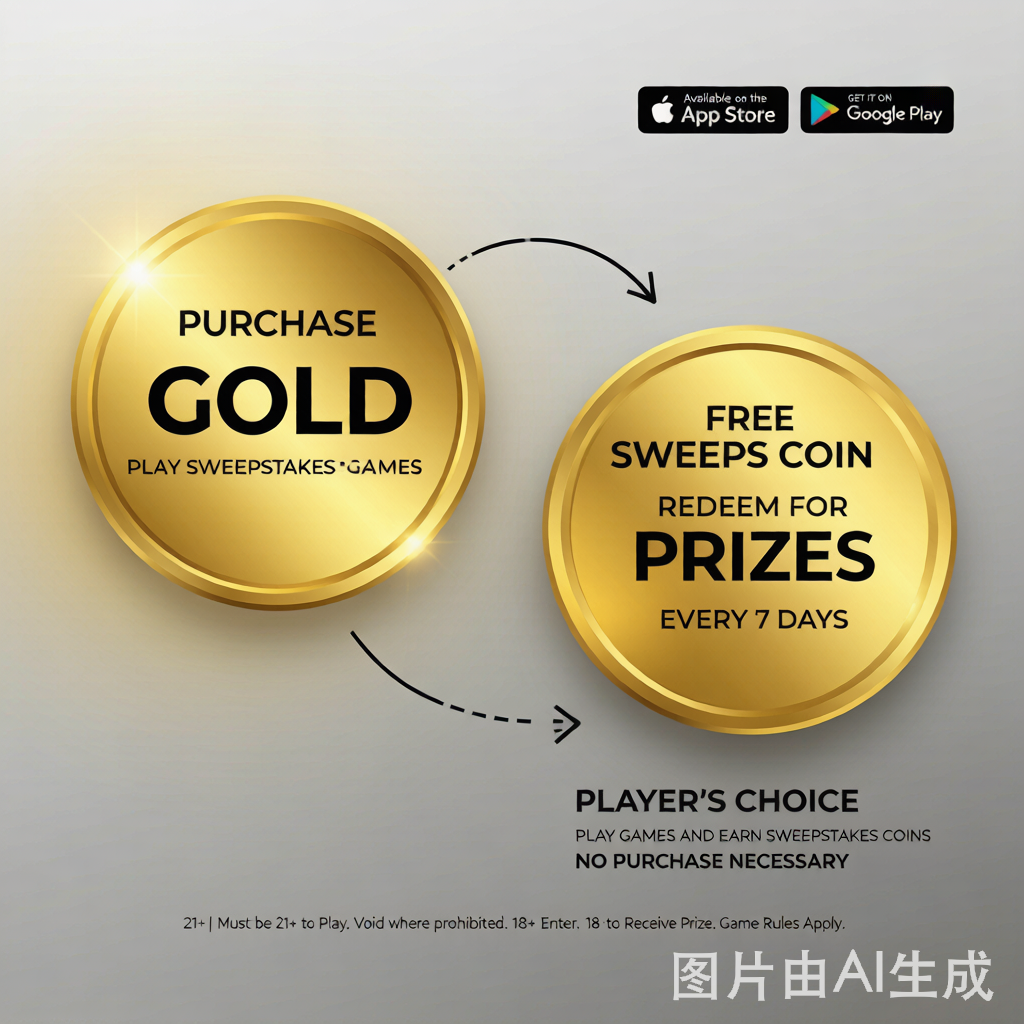
Sweepstakes models. The two-coin structure described above. The purchased coin (e.g., "Gold") is for play only; the free "Sweeps" coin can be redeemed for prizes. Sweepstakes law requires a free entry method, clear official rules, and no purchase necessary to win. Done correctly, this is a well-established compliant framework in the United States — but the rules are technical, and a misstep can collapse the entire model.
Skill-based / ticket-redemption games. Outcomes are determined wholly or predominantly by player skill rather than chance. A compliant mobile skill game app might score accuracy, timing, or strategy and award tickets redeemable for prizes. Skill-based classification is exactly why our coverage of Pennsylvania, Texas, and Florida skill game laws matters: the skill-vs-chance test is where state regulators draw the line.
Each type serves a different operator profile. Social-casino is simplest to explain; sweepstakes unlocks prize redemption; skill-based leans on the skill defense. Crucially, the three are not interchangeable once you cross a state line — what qualifies as a compliant mobile skill game in one jurisdiction may be reclassified in another, which is why the legal section below deserves as much attention as the product section. Building the wrong type for your market is the second-most-common beginner error after the real-money confusion we opened with. GOLDPRIME GAME helps operators choose and build the right one for their market, and to map it against the specific state rules they intend to enter.
Beginners often ask whether a mobile social game is "just a slot machine on a phone." It is not — and the differences are legal, not cosmetic.
Land-based cabinets are physical machines in a location: fish-game tables, redemption kiosks, skill-game terminals. They are governed by premises law, equipment certification, and local permitting. Our fish game machine buying checklist walks through the hardware red flags (uncertified boards, mislabeled voltage, clone firmware) that simply do not exist in the same form on mobile.
Mobile/social games replace the cabinet with an app and a server. There is no coin hopper, no physical redemption counter on-site, and no machine certification in the traditional sense. Instead, the compliance surface moves to app-store policy (Google Play / Apple App Store), payment processors, SDK provenance, and the sweepstakes/skill legal framework.
Real-money online gambling is a third, separate category: licensed, age-verified, geo-fenced, and cash-settled. It is not a "type" of social game and should never be quietly merged into one. The honest framing for any beginner: a compliant mobile game is entertainment with prizes; a regulated online casino is a financial wager. Keep them in separate mental boxes.
This section is the heart of a compliant mobile game beginner guide, and the part most worth getting right. The following is general education, subject to confirmation with local counsel / regulators — state law in 2026 is moving and contradictory.
Sweepstakes (federal + state promotional law). Operate with a free entry path, published official rules, and prize redemption only. No purchase may be required to win. This is the most common compliant prize framework for social-style apps. The FTC's promotional-sweepstakes guidance (ftc.gov) is the baseline federal reference operators should know.
Ticket-redemption / skill-based (state law varies). Some states assess whether a game is chance or skill. The 2026 picture: - Pennsylvania — per the June 15, 2026 Supreme Court ruling, games of chance styled as "skill games" were treated as slot machines, with a roughly 120-day transition period for affected operators. Confirm current status with Pennsylvania counsel before launching. - Texas — awards tied to skill games are generally constrained to non-cash prizes, commonly understood around a de minimis threshold (often cited as under $5 non-cash). Verify the exact current limit with Texas counsel. - Florida — under F.S. 546.10, simulated casino/gaming devices and cash prizes are restricted near-comprehensively; a mobile skill or social product must be structured carefully to avoid the simulated-casino-device definition. Confirm with Florida counsel.
The takeaway: there is no single "US rule." A model legal in one state can be a problem in another. Read our North America skill-game compliance framework (PA/TX/FL 2026) before committing budget, and treat this guide as a map, not a permit. Whether social casino games are legal for your model depends on the prize framework and your state, so confirm before building.
A compliant launch is a sequence, not a leap. Here is the operator's checklist.
1. Plan the model. Choose social-casino, sweepstakes, or skill-based. Write down exactly what players pay, what they receive, and what they can redeem. If "cash" appears anywhere in that sentence, stop — you are outside this guide's scope.
2. Confirm the legal lane. For each target state, confirm the model with local counsel. Document the opinion. This is your insurance policy.
3. Pick a platform / dev partner. You can build no-code (tools like GDevelop or Unity-based templates) or engage a B2B developer. For operators who want a compliant, customizable build, GOLDPRIME GAME provides platform and custom-development services tuned to regulated amusement markets. Vet any vendor for licensed payment handling, authorized SDKs, and a clean compliance record.
4. Soft-launch and monitor. Release to a narrow audience, watch payment flows, redemption requests, and player complaints. Keep official rules visible and a free-entry path live.
5. Scale only after clean signals. Expand states one at a time, always re-confirming local law. A compliant rollout is iterative: each new market is a fresh legal question, not a copy-paste of the last launch. Operators who treat this mobile game beginner guide as a one-time checklist — rather than a living process — are the ones who get surprised by a 2026 regulatory change. If your real question is how to start a mobile game business, treat the five steps above as your backbone and the legal section as your gate. If your real question is how to start a mobile game business, treat the five steps above as your backbone and the legal section as your gate. Need a land-based starter first? See our how to start a fish table business guide for the cabinet side of the same journey.
Every number below is an estimate, subject to confirmation with your vendor / local conditions. There are no guarantees and no promised payback in a compliant amusement business.
Development cost. A basic social-casino app may run from a few thousand to tens of thousands of USD depending on scope, art, and backend; a custom skill-based or sweepstakes build with compliant payments can run higher. Mobile game app development cost varies most with compliance logic and backend, so scope it with a vendor. Engage GOLDPRIME GAME or a comparable vendor for a scoped quote.
Payment / SDK / compliance overhead. Sweepstakes and redemption logic, age-gating, geo-fencing, and legal review add recurring cost. Budget for ongoing counsel review as state law shifts in 2026.
User acquisition. Paid mobile UA ranges widely by channel and creative; treat any "CPI" figure from a forum as a starting guess, not a contract. Compliant messaging (no "win cash" claims) also limits some ad channels.
Monetization (compliant). Coin packs, subscriptions, branded prizes, and sweepstakes entries are typical. Redemption value should stay inside the prize framework your lawyer approves. Never imply guaranteed earnings.
A common path to failure is copying a model you do not fully understand. Watch for these red flags — the mobile equivalents of the uncertified-board and wrong-voltage hardware warnings on the cabinet side (see our fish game machine buying checklist).
Illegal online casino in disguise. Any app that takes a deposit and pays cash winnings without a license is illegal in most US jurisdictions. Not a "gray area" — a red line.
Cash payout / "guaranteed payout" claims. If an SDK, a vendor, or an ad promises guaranteed returns or cash-out, walk away. Compliant prizes are merchandise, sweepstakes awards, or tickets — never guaranteed money.
Crypto betting. Tying gameplay to crypto deposits or token payouts imports securities, money-transmission, and gambling risk at once. Out of scope for this guide.
Unlicensed payment aggregation. Using a payment processor that lumps your flows with unlicensed gambling traffic will get you shut down and possibly investigated. Use licensed, transparent processors only.
Unauthorized SDKs. Third-party SDKs that inject undisclosed ads, data harvesting, or hidden monetization break app-store policy and privacy law. Audit every SDK's provenance.
Self-audit checklist: (1) No real-money bet or cash prize anywhere? (2) Free entry path live for sweepstakes? (3) Official rules published? (4) Counsel sign-off per state? (5) Licensed payments and audited SDKs? If any answer is "no," do not launch.
What is a mobile / social game? A game played on a phone or tablet with virtual currency only — no real-money bets and no cash prizes. Rewards, if any, come through ticket-redemption, sweepstakes, or social-casino (no real money) frameworks.
Is a social mobile game legal in the United States? The compliant versions described here are generally permissible, but legality depends on the model and the state. Sweepstakes needs a free entry path and official rules; skill-based classification varies by state. Always confirm with local counsel — this guide is education, not legal advice.
How is it different from real-money online gambling? A compliant social game involves no real funds as bets or prizes; a regulated online casino takes deposits and pays cash winnings under a license. They are separate legal categories and must not be merged.
How much does it cost to build a compliant mobile game? Estimates range from a few thousand to tens of thousands of USD depending on scope and compliance needs, subject to confirmation with your vendor / local conditions. Request a scoped quote from a B2B developer such as GOLDPRIME GAME.
Can I run a sweepstakes mobile game legally? Yes, under promotional-sweepstakes law, if you provide a free entry method, publish official rules, and redeem only prizes (no purchase required to win). State nuances exist — confirm with counsel before launch.
What is a compliant mobile skill game? A game where outcome depends predominantly on player skill rather than chance, awarding tickets or prizes rather than cash. Its legal treatment hinges on the skill-vs-chance test, which differs by state (see our PA/TX/FL coverage).
Are Pennsylvania, Texas, and Florida rules the same in 2026? No. Pennsylvania's 2026 Supreme Court ruling treated chance-styled skill games as slot machines with a transition period; Texas generally limits non-cash prizes; Florida restricts simulated casino devices under F.S. 546.10. Each requires its own counsel confirmation.
A compliant mobile game beginner guide ends where it began: with the boundary. Social, sweepstakes, and skill-based mobile games are a legitimate, growing corner of North American amusement — but only when real money stays out of the bet and out of the prize. Plan the model, confirm the legal lane per state, choose a trustworthy dev partner, and launch small. GOLDPRIME GAME builds compliant platforms and custom mobile/social game solutions for operators who want to do this the right way; if you are ready to scope a build, talk to our team. And if your business also touches physical cabinets, start with our how to start a fish table business and keep our fish game machine buying checklist handy for the hardware side.
中文读者(Chinese readers):我们另有中文版资源覆盖相关主题,可作为扩展阅读:
{
  "@context": "https://schema.org",
  "@type": "Article",
  "headline": "Mobile Game Beginner Guide — What They Are and How to Start (2026)",
  "description": "Beginner guide to compliant mobile & social games in North America: social casino, sweepstakes, skill-based (no real money), PA/TX/FL 2026 compliance, startup steps, and costs.",
  "inLanguage": "en",
  "datePublished": "2026-07-27",
  "author": {
    "@type": "Organization",
    "name": "GOLDPRIME GAME"
  },
  "publisher": {
    "@type": "Organization",
    "name": "GOLDPRIME GAME"
  },
  "mainEntityOfPage": {
    "@type": "WebPage",
    "@id": "https://www.chinaslotmachine.com/blog/en/mobile-game-beginner-guide/"
  }
}
{
  "@context": "https://schema.org",
  "@type": "FAQPage",
  "mainEntity": [
    {
      "@type": "Question",
      "name": "What is a mobile / social game?",
      "acceptedAnswer": {
        "@type": "Answer",
        "text": "A game played on a phone or tablet with virtual currency only — no real-money bets and no cash prizes. Rewards, if any, come through ticket-redemption, sweepstakes, or social-casino (no real money) frameworks."
      }
    },
    {
      "@type": "Question",
      "name": "Is a social mobile game legal in the United States?",
      "acceptedAnswer": {
        "@type": "Answer",
        "text": "The compliant versions described here are generally permissible, but legality depends on the model and the state. Sweepstakes needs a free entry path and official rules; skill-based classification varies by state. Always confirm with local counsel — this guide is education, not legal advice."
      }
    },
    {
      "@type": "Question",
      "name": "How is it different from real-money online gambling?",
      "acceptedAnswer": {
        "@type": "Answer",
        "text": "A compliant social game involves no real funds as bets or prizes; a regulated online casino takes deposits and pays cash winnings under a license. They are separate legal categories and must not be merged."
      }
    },
    {
      "@type": "Question",
      "name": "How much does it cost to build a compliant mobile game?",
      "acceptedAnswer": {
        "@type": "Answer",
        "text": "Estimates range from a few thousand to tens of thousands of USD depending on scope and compliance needs, subject to confirmation with your vendor / local conditions. Request a scoped quote from a B2B developer such as GOLDPRIME GAME."
      }
    },
    {
      "@type": "Question",
      "name": "Can I run a sweepstakes mobile game legally?",
      "acceptedAnswer": {
        "@type": "Answer",
        "text": "Yes, under promotional-sweepstakes law, if you provide a free entry method, publish official rules, and redeem only prizes (no purchase required to win). State nuances exist — confirm with counsel before launch."
      }
    },
    {
      "@type": "Question",
      "name": "What is a compliant mobile skill game?",
      "acceptedAnswer": {
        "@type": "Answer",
        "text": "A game where outcome depends predominantly on player skill rather than chance, awarding tickets or prizes rather than cash. Its legal treatment hinges on the skill-vs-chance test, which differs by state."
      }
    },
    {
      "@type": "Question",
      "name": "Are Pennsylvania, Texas, and Florida rules the same in 2026?",
      "acceptedAnswer": {
        "@type": "Answer",
        "text": "No. Pennsylvania's 2026 Supreme Court ruling treated chance-styled skill games as slot machines with a transition period; Texas generally limits non-cash prizes; Florida restricts simulated casino devices under F.S. 546.10. Each requires its own counsel confirmation."
      }
    }
  ]
}