
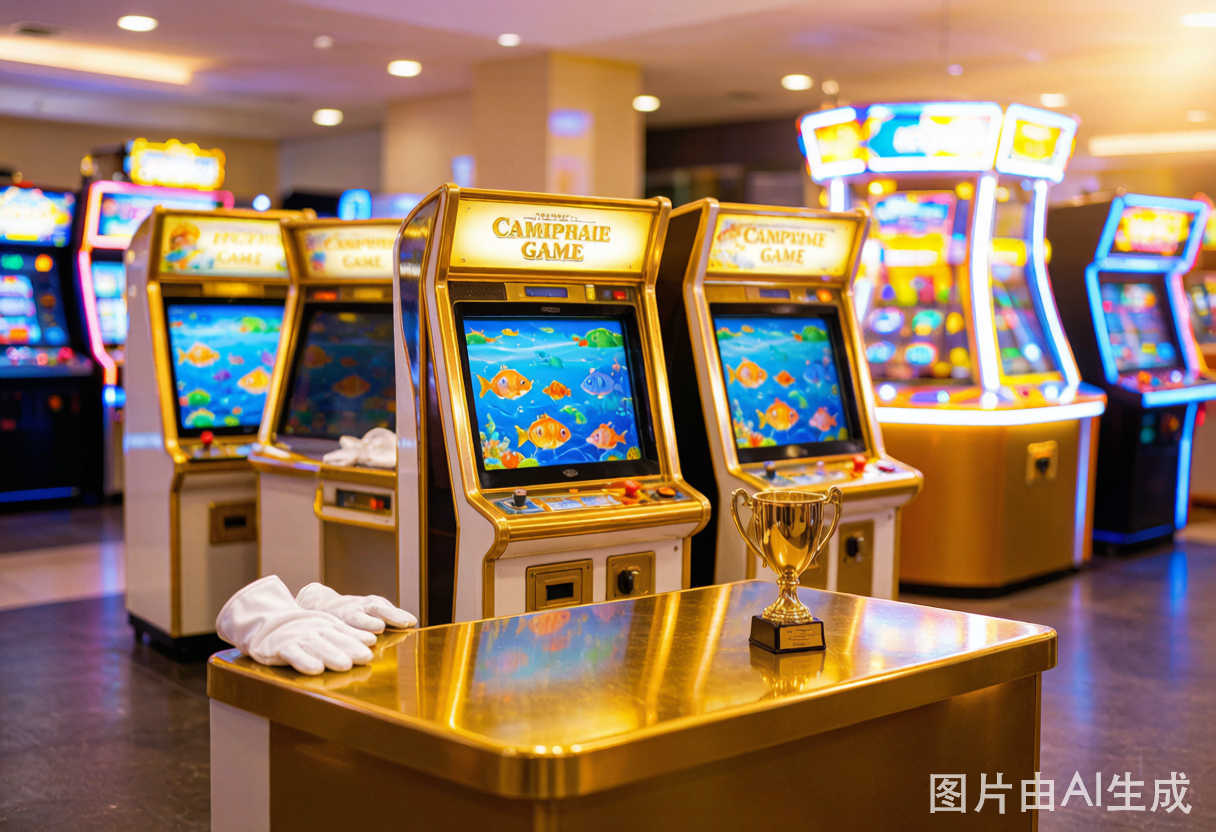
A fish table business is one of the most accessible entry points into the skill-game and amusement industry — but getting it right means treating it like the real business it is, not a side hustle you figure out as you go. The short answer: you start by picking a venue model (bar, convenience store, family entertainment center, or a route operation), confirm the license rules in your county, choose commercial-grade cabinets that fit your space and budget, then install, market, and track performance week by week. This guide walks you through every step, flags the mistakes that sink first-time operators, and points you to the pricing, equipment, and legal guides you'll actually need.
Here's the thing most "how to" articles skip: the fish table business looks simple from the outside, and that's exactly why so many new owners lose money in month two. A great location with the wrong machine, or the right machine in a county that bans it, both end the same way. We're going to build your plan in the right order so you don't become a cautionary tale.
What you'll get from this article: a seven-step launch sequence, three real-world operator scenarios, the compliance checklist that protects you, and a clear set of next actions — including where to get a free equipment-and-compliance consultation before you spend a dollar.
Key Takeaways - A fish table business can launch in four models — bar/c-store placement, a dedicated family entertainment center (FEC), or a low-risk route operation — each with very different startup costs and license exposure. - County and municipal rules vary dramatically; Pennsylvania's 2026 Supreme Court ruling reclassified skill games as slot machines under a 120-day safe harbor, so local confirmation is now mandatory, not optional. - Commercial-grade cabinets (43"–65", 6–10 player) run roughly $1,000–$4,200 per unit at wholesale, with a realistic single-site startup budget between $15,000 and $80,000 depending on model. - Revenue-share (route) placement lets you start with $0 upfront and 35–50% of collections, while buying outright keeps 100% but requires $4,000–$8,000 per machine in capital. - The operators who survive year one track hold percentage, revenue per cabinet, and foot traffic weekly — and they expand only after a location proves itself for 90+ days. 中文读者:我们另有 中文版商用设备选购指南(2026)→,面向北美华人开店者的整包设备采购逻辑。
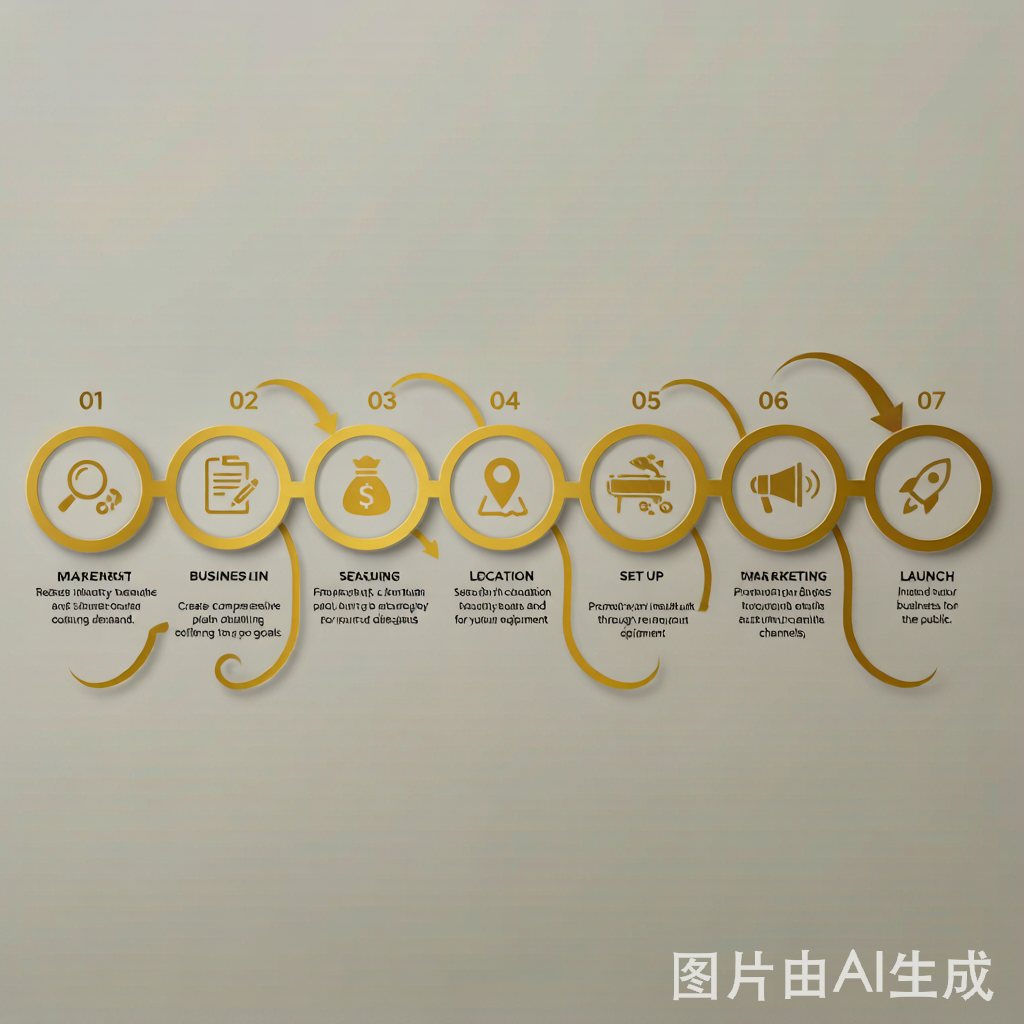
The skill-game and amusement sector has matured fast. Post-pandemic demand for social, co-located gaming pushed revenue-per-square-foot potential well above traditional PC or redemption stations. Route operators now place machines in bars, restaurants, convenience stores, and truck stops across multiple states, often with zero upfront cost to the venue.
But "now" carries a warning label. Here's the headline: on June 15, 2026, Pennsylvania's Supreme Court ruled 4–2 that skill games count as slot machines under state law (Bidlingmaier Law, 2026). There's a 120-day safe harbor to sort things out. On top of that, Governor Shapiro's 2026–27 budget would reclassify them as Video Gaming Terminals — capped at 5 per location. None of this means the door is closing. It means the rules are moving, and the winners are the operators who check their local requirements before they buy.
The cautious-but-opportunistic stance is the right one. Build your fish arcade business plan around compliance first, then speed.
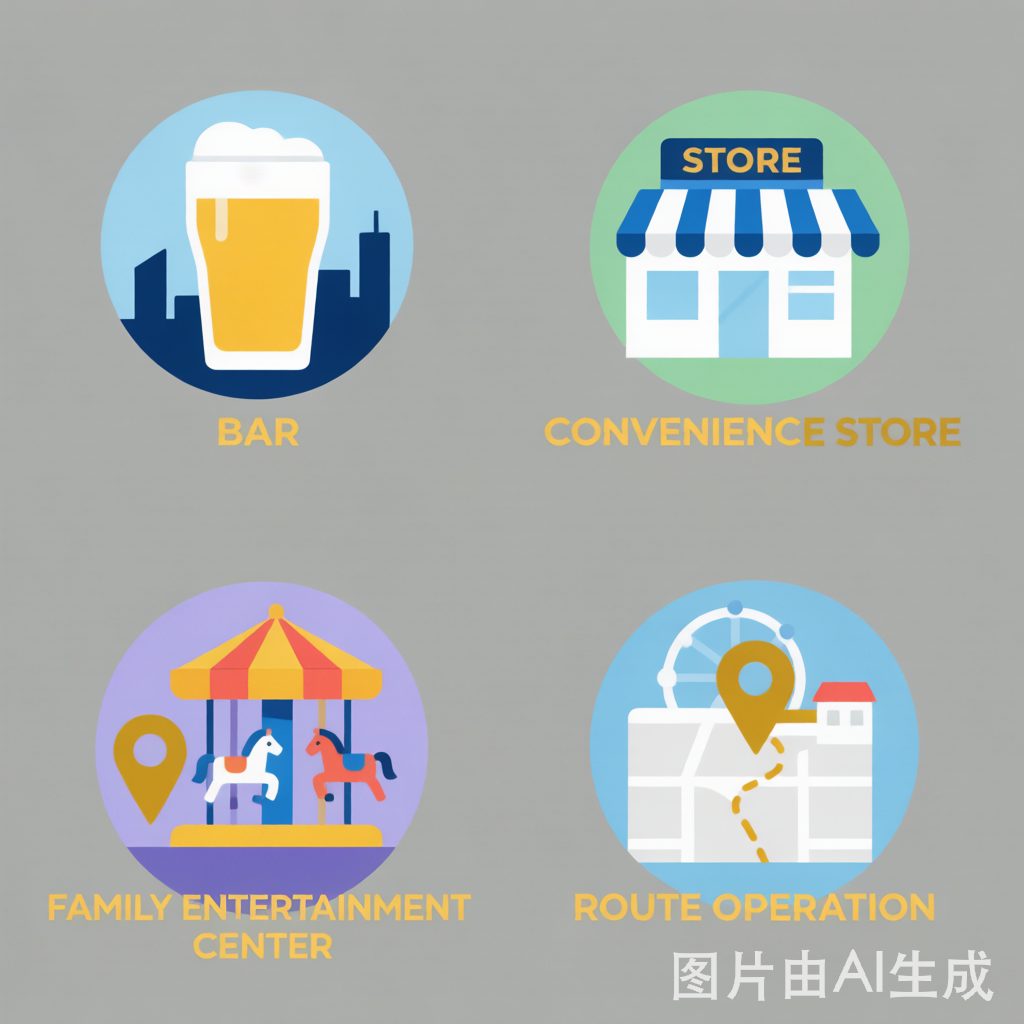
Your entire cost structure, license burden, and marketing plan flow from this first decision. There are four common ways to run a fish table business in the U.S.
1. Bar or Tavern Placement You place one to four cabinets in a bar or lounge. High dwell time, social play, evening peak. Often paired with revenue-share so the bar owner carries no risk.
2. Convenience Store / C-Store Low overhead, steady daytime foot traffic, lottery-and-ATM adjacency. Locations like these report 2–4 machines generating daily revenue alongside existing services (source: DBA Amusements install examples, 2026).
3. Family Entertainment Center (FEC) A dedicated game room or arcade. Higher fit-out cost, broader audience, ticket-redemption configurations. This is where a veteran-turned-entrepreneur story often starts (more below).
4. Route Operation You own or place multiple machines across many locations and service them. Lowest single-site risk, highest logistics load. Perfect for testing the waters before committing capital — a low-risk way to start a skill game route before buying a single cabinet.
If you already run a bar, store, or venue, model 1 or 2 is almost certainly your fastest, cheapest entry. If you're starting cold with capital, model 3 or 4 gives you control.
Mini Story #1 — Sarah's C-Store Test Sarah owned a single convenience store in Greensburg, PA. She was nervous about the legal side and didn't want $8,000 tied up in machines. A route operator placed two skill-game cabinets at zero cost, handled collections, and paid her a 40% weekly split. In month one the machines earned $4,200 gross; Sarah's share was $1,680 with no maintenance headaches. Eighteen months later she'd added a kiosk and a third machine — proof that starting small and compliant beat going all-in blind.
Fish tables are big. A 6-player 55" cabinet is about 6.4 ft wide × 4.6 ft deep × 2.6 ft tall (194 × 140 × 80 cm) and weighs roughly 540 lbs (244 kg) — shop in imperial if you're fitting a U.S. floor plan (source: Arcooda / Highway Games spec sheet). An 8-player model pushes to ~6.7 ft deep. You need clearances on all sides for players, service, and ADA access.
Space checklist: - Minimum 80–100 sq ft of floor area per 6–8 player cabinet including aisles - 110V–220V power within reach; budget for dedicated circuits on high-traffic sites - Level, reinforced flooring for 540 lb loads - Visible-from-entry placement to drive impulse play - Ventilation and lighting suited to 8+ hour daily operation - Compliance with local occupancy and ADA path-of-travel rules
Don't cram cabinets against a wall where a technician can't reach the back panel. Service access is where cheap layouts turn expensive. Need a cabinet purpose-built for tight floor plans? The Solaris commercial fish table cabinet packs a 43" display into a compact footprint that fits most bars and c-stores without sacrificing player count.
This is the step new operators skip and regulators remember. There is no single federal "fish table license." Rules are set at state, county, and even municipal level — and two towns 20 miles apart can have opposite policies (real cases we've seen; source: Legal Clarity, PA Skill Games overview).
A practical compliance sequence: 1. Call your county clerk or revenue department and ask specifically about skill-game / amusement device permits — county-level skill game permit rules vary so widely that this single call can save you thousands. 2. Check your municipality for local ordinances — some ban devices outright, others cap machine counts or set hours. 3. Confirm age rules: 18+ generally, 21+ where alcohol is served. Post signage. 4. Register your business entity (LLC is the common choice for liability protection), get an EIN, and open a commercial bank account. 5. Secure a Certificate of Occupancy for the premises and any required zoning variance. 6. Keep clean financial records — detailed ledgers of payouts and net machine income are your defense in any audit.
For the legal deep-dive, including how Pennsylvania, Texas, and Florida each treat skill-game machines differently, read our full breakdown: Skill Game Machine Laws: Pennsylvania, Texas & Florida. The bottom line: never take a distributor's "it's legal everywhere" at face value. Confirm it in writing for your county. You can also check the official PA Gaming Control Board for Pennsylvania-specific guidance.
Thinking about adding machines across multiple sites? Our team maps county-level rules for operators every week — request a free compliance consultation →
Your cabinet choice drives both revenue and risk. Commercial-grade matters: consumer frames crack under 540 lb and 10-hour daily loads. This is where the fish table business cost becomes real, so budget before you fall in love with a screen size.
What to look for: - Screen size & player count: 43" (2–4 player), 55" (6–8 player), 65" (8–10 player). Bigger screens = higher crowd appeal and earnings potential. - Build: metal framing, reinforced acrylic, toughened glass. Avoid all-plastic chassis. - Software licensing: must be licensed for commercial use in your region. Unlicensed software risks legal shutdown. - Warranty & parts: demand minimum 1-year parts/labor; confirm replacement PCB and screen availability. - Payment system: bill acceptor, coin, ticket redemption, or QR — match it to your venue type. - Hold percentage: adjustable payout math so you control margin.
Budget reality (wholesale unit pricing, 2026 data): - Entry 43" / 6-player cabinet: ~$1,000–$1,200 - Mid 55" 6–8 player: ~$700–$1,743 (volume), up to $4,150 retail-configured - Premium 65" 8–10 player: ~$1,100–$4,200
Realistic single-site startup range: $15,000–$80,000, covering 2–6 cabinets, shipping, import duties, install, signage, and 2–3 months operating buffer. Full cost modeling is in our Fish Game Machine Price & Cost Breakdown 2026.
For cabinet selection methodology — hold math, player capacity, and brand comparison — see How to Choose a Commercial Fish Game Cabinet. Our own Solaris commercial fish table cabinet (43" commercial unit) and the F600 series are built for exactly this use case.
Buy vs. revenue-share: buying keeps 100% of revenue but costs $4,000–$8,000 per machine upfront; revenue-share costs $0 upfront and pays you 35–50% (source: SkillGamesForPA revenue-share analysis). Many smart operators start on share, prove the location, then buy.
Mini Story #2 — Marcus's FEC Pivot Marcus, a retired Marine in Texas, wanted a family entertainment center but feared a $60,000 mistake. He started a route operation instead — placing three cabinets in local bars on revenue-share, zero capital out. After 90 days of clean weekly reports showing $3,100 average monthly gross per site, he used the proof to finance his own FEC with four 55" cabinets. By month eight his center cleared $9,400/month net. The route didn't just de-risk him; it funded him.
Installation is faster than most expect — route operators commonly go live within 48 hours to 10 business days of approval (sources: Omni Gaming, DBA Amusements).
Your install checklist: - Position cabinets for visibility, traffic flow, and technician rear-access - Verify power, grounding, and surge protection - Load licensed game software; set initial hold percentage per your margin plan - Connect bill validator / ticket printer / kiosk and test 20+ full play cycles - Train staff on basic operation and age-check procedure - Photograph placement for insurance and compliance records
If you buy outright, confirm whether your supplier offers on-site install or ships "plug-and-play" with remote support. Either way, run a 48-hour burn-in before promoting to customers.
A fish table business lives or dies on repeat play. The machine is the product; the experience is the retention engine. Sounds obvious — but most first-years forget it by month three, and that's when the machine starts collecting dust.
Operational basics: - Set and log hold percentage weekly; tune to local player tolerance - Empty cash boxes / reconcile kiosk reports on a fixed schedule - Track revenue per cabinet, not just total — weak cabinets get moved, not ignored - Maintain a simple cleaning and preventive-care routine (dry-clean surfaces, check coin paths)
Marketing that works for venues: - "New game just dropped" signage at the counter and on social - Loyalty: return-play cards or app alerts for FEC models - Cross-promote with the host business (bar happy hour + game night) - Local Facebook/Nextdoor posts showing the cabinet in action
Not sure which cabinet fits your bar or store? Tell us your space and budget — our equipment specialists will match one →
Week one excitement hides month-three truth. The operators who scale do three things:
We're building a full Fish Table Business Profit & ROI breakdown that models payback periods by venue type and machine count — bookmark it for your expansion math.
Mini Story #3 — The $500 Lesson A first-time operator in Nebraska ignored the device cap (max 4 per 4,000 sq ft; $250/device annual decal, source: INAMAX Nebraska) and installed six. The fifth and sixth were flagged in a routine check; he paid penalties and removed two. His takeaway: "The rules aren't suggestions. One 20-minute county call would've saved me $500 and a headache." He now checks caps before every new site.
How much does it cost to start a fish table business? A single-site launch runs $15,000–$80,000 including 2–6 commercial cabinets, shipping, install, and buffer. Revenue-share route placement can start at $0 upfront. Full numbers are in our price breakdown guide.
Do I need a license to open a fish game room? Almost always yes at the business level (entity, occupancy, zoning), and device permits vary by county/municipality. Confirm with your county revenue department before purchasing. Laws change — verify within 30 days of any purchase decision.
Is a fish table business legal in my state? It depends on your state, county, and town — and the law is shifting (e.g., Pennsylvania's 2026 Supreme Court ruling). Always verify locally; see our state law guide.
Should I buy machines or use revenue share? New or cautious? Start on revenue-share (35–50% split, $0 upfront). Confident in your location and have capital? Buy for 100% revenue. Many use both.
What's the best cabinet size for a small venue? A 43"–55" 6-player commercial cabinet fits most bars and c-stores with ~80–100 sq ft including aisles. See our cabinet selection guide.
How long until I see profit? Route placements earn from day one. Owned sites typically hit payback in 4–12 months depending on traffic and hold settings.
Starting a fish table business in 2026 is a real opportunity with real guardrails. Pick your venue model, confirm your county's rules in writing, budget for commercial-grade cabinets, and track performance weekly. The operators who win aren't the ones who move fastest — they're the ones who confirm first and expand on proof.
Ready to spend smart instead of sorry? Book a free 20-minute call before you buy a single cabinet — start your consultation → and we'll map your county rules and match a cabinet to your floor.
Meta Title: How to Open a Fish Table Business Step-by-Step Meta Description: Step-by-step guide to open a fish game room: license requirements, startup cost, cabinet selection & profit ROI. Get a free compliance consult. Primary Keyword: fish table business Secondary Keywords: fish table business cost, how to open a fish game room, fish table business license, fish arcade business plan, start a skill game route URL Slug: /blog/en/how-to-start-fish-table-business/ Word Count: ~2,850
<head> injection){
"@context": "https://schema.org",
"@type": "Article",
"headline": "How to Start a Fish Table Business (Step-by-Step)",
"description": "Step-by-step guide to starting a fish table business: pick a venue model, confirm county license rules, choose commercial cabinets, then install, market, and track performance weekly.",
"inLanguage": "en",
"datePublished": "2026-07-15",
"author": {
"@type": "Organization",
"name": "GOLDPRIME GAME"
},
"publisher": {
"@type": "Organization",
"name": "GOLDPRIME GAME"
},
"mainEntityOfPage": {
"@type": "WebPage",
"@id": "https://www.chinaslotmachine.com/blog/en/how-to-start-fish-table-business/"
}
}